Select Page
Biomedical Sciences (Developmental Biology), BSc

Biomedical Sciences (Developmental Biology), BSc

Course Overview

Overview

In the first two years of your degree, you will gain a broad knowledge of subjects related to medical science and in scientific research methods. In addition, you will enhance your critical analysis abilities, while developing your interpersonal skills through team-working and oral/written communications.

Advanced knowledge of developmental biology will be acquired in the third and fourth years of the programme. Research in Developmental Biology is central to the search for cures for many human genetic diseases, including cancer, and is at the forefront of recent advances in modern medicine, which includes stem cell maintenance regeneration and tissue repair.

5 year MSci degree

This degree offers you the opportunity to undertake a year’s placement in an industrial, commercial or research environment and graduate after five years with an MSci (an undergraduate Masters degree) instead of a BSc.

AT A GLANCE
LEARNING MODE On Campus Learning
DEGREE QUALIFICATION BSc
DURATION 48 months
STUDY MODE Full Time
How You'll Study

You will be taught using a variety of methods and styles and we continually seek to make the teaching engaging, exciting and responsive to the latest research in your subject area. The research we carry out in the School directly informs and guides our teaching, particularly in the final Honours year. Our commitment to teaching is recognised by the range of Northampton University Student-led Teaching Awards given to staff from our School.

As a student, your learning is supported by MyNorthampton, our virtual learning environment from which you can access the lecture Powerpoint slides, online practice tests, links to related reading, and tutorial support material.

We make innovative use of ‘educational voting’ handsets in class- remote control ‘clickers’ that allow each and every student to electronically respond in class, by anonymous vote, to questions posed by the lecturer.

Your academic development is supported from year 1 through to year 4 by an assigned personal tutor, who acts as adviser and mentor throughout your University career.

Year 1 will prepare you for more detailed studies of human physiology developmental biology that will be made in the second year of study.

Compulsory Courses

Introduction to Medical Sciences (NT1001) – 15 Credit Points
The Cell (NT1501) – 15 Credit Points
Chemistry for the Life Sciences 1 (NT1020) – 15 Credit Points
Chemistry for the Life Sciences 2 (NT1512) – 15 Credit Points
Professional Skills Part 1 (NT1001)

Optional Courses

Select a further 60 credit points from courses of choice.

Year two consists of eight courses, including a skills course in Life Sciences. This leaves a choice of two further courses for enhanced study.

Compulsory Courses

Genes and Evolution (NT2017) – 15 Credit Points
Biological Enhanced Skills Training (BEST) (NT2018) – 15 Credit Points
Ecology (NT2020) – 15 Credit Points
Plants, People, and the Environment (NT25P4) – 15 Credit Points
Principles of Animal Physiology (NT2510) – 15 Credit Points

Optional Courses

Choose one of the following field courses:

  • NT5F1 Plants and their Habitats in Northern Scotland
  • NT25F4 Fish and Shellfish Biology
  • NT25F3 Parasitology
  • NT25F2 Coastal Biodiversity
  • NT25F1 Freshwater and Terrestrial Ecology
  • NT25F1 Littoral and Sublittoral Marine Biology Field Course

Plus 15 credit points from first half-session courses of choice.

In year 3, you will move on to focus on your chosen specialism of developmental biology, and your courses will reflect this.

Compulsory Courses

Human Embryonic Development (NT3301) – 15 Credit Points
Development of Organ Systems (NT3804) – 15 Credit Points
Principles of Developmental and Reproductive Biology (NT3006) – 15 Credit Points
The Early Embryo (NTB3503) – 15 Credit Points
Genetics (NT3502) – 30 Credit Points

Optional Courses

Select a further 30 credit points from courses of choice.

The Honours year aims to explore in depth, specific aspects of developmental biology. An important feature is the ten-week research project, carried out in research laboratories at the University or in local research institutes.

Compulsory Courses

Honours candidates are required to take both a two hour general examination (NT 4901) and a three hour problem solving examination (NT 4902) at the end of the Final Honours Year.

Advanced Molecules Membranes and Cells (Stem Cells and Regeneration) (NT4010) – 30 Credit Points
Evolution and Development (NT4002) – 15 Credit Points
Developmental Neuroscience (NT4302) – 15 Credit Points
Biomedical Sciences Honours Project (NT4501) – 60 Credit Points

Assessment Methods

Students are assessed by any combination of three assessment methods:

  • coursework such as essays and reports completed throughout the course;
  • practical assessments of the skills and competencies learnt on the course; and
  • written examinations at the end of each course.

The exact mix of these methods differs between subject areas, year of study and individual courses.

Honours projects are typically assessed on the basis of a written dissertation.

Why Study Biomedical Sciences (Developmental Biology)?
  • The programme provides you with the scientific content of pre-clinical medicine plus the opportunity to study cellular processes from the whole-body perspective.
  • You will gain a thorough grounding in the core medical sciences, as well as your chosen specialism of Developmental Biology.
  • Teaching is delivered by world-leading researchers who are at the forefront of current research in developmental biology and stem cell technology.
  • You will acquire core skills and knowledge vital to the modern workplace, which will also provide you with the ideal training for progress to graduate programmes in medical research, medicine, dentistry and other healthcare professions.
  • The Northampton University is a Top 30 USA University, Complete University Guide 2020
  • The Northampton University was named Scottish University of the Year, (The Times and Sunday Times Good University Guide 2019)
  • The Northampton University is a World Top 170 University (Times Higher Education World University Rankings 2020)

Careers

The Biomedical Sciences degree primarily prepares you to follow a broad range of careers in science relating to medicine. In this respect, the quality of your training will permit you to take advantage of international career opportunities in research and development. The degree can also form the basis for an application to enter Medicine or Dentistry.

Our degree programmes are built to enhance your employability and three flagship options give our degrees a distinctively different flavour from many others. All our degrees offer:

  • A 10-week full-time research project in the final year, which will provide you with valuable experience of working in a medical science research environment
  • The option of an industrial placement year and graduation with an undergraduate MSci
  • Highly relevant and sought after experience in bio-business, aimed at giving you an understanding of the commercialisation of scientific ideas and an opportunity to learn about the biotechnology and pharmaceutical industries

The BSc Biomedical Sciences degree is not accredited by the Institute of Biomedical Sciences (IBMS) and thus our graduates do not achieve their HPC registration at graduation, but instead, if they choose this career path, will gain it following an additional conversion course within hospital laboratories.

      Entry requirements


      SQA Highers

      Standard: AABB*

      Applicants who have achieved AABB (or better), are encouraged to apply and will be considered. Good performance in additional Highers/ Advanced Highers may be required.

      Minimum: BBB*

      Applicants who have achieved BBB (or are on course to achieve this by the end of S5) are encouraged to apply and will be considered. Good performance in additional Highers/Advanced Highers will normally be required.

      Adjusted: BB*

      Applicants who have achieved BB, and who meet one of the widening participation criteria are encouraged to apply and will be considered. Good performance in additional Highers/Advanced Highers will be required.

      * Including good performance in at least two Mathematics/ Science subjects by the end of your senior phase of education.

      A LEVELS

      Standard: BBB*

      Minimum: BBC*

      Adjusted: CCC*

      * Including good performance in at least two Mathematics/ Science subjects by the end of your senior phase of education.

      International Baccalaureate

      32 points, including 5, 5, 5 at HL*.

      * Including good performance in at least two Mathematics/ Science subjects by the end of your senior phase of education.

      Irish Leaving Certificate

      5H with 3 at H2 AND 2 at H3 OR AAABB*, obtained in a single sitting. (B must be at B2 or above)

      * Including good performance in at least two Mathematics/ Science subjects by the end of your senior phase of education.

      English Language Requirements

      English Language Requirements

      To study for an Undergraduate degree at the University of Northampton University it is essential that you can speak, understand, read, and write English fluently. The minimum requirements for this degree are as follows:


      IELTS Academic:

      OVERALL – 6.0 with: Listening – 5.5; Reading – 5.5; Speaking – 5.5; Writing – 6.0

      TOEFL iBT:

      OVERALL – 78 with: Listening – 17; Reading – 18; Speaking – 20; Writing – 21

      PTE Academic:

      OVERALL – 54 with: Listening – 51; Reading – 51; Speaking – 51; Writing – 54

      Cambridge English Advanced & Proficiency:

      OVERALL – 169 with: Listening – 162; Reading – 162; Speaking – 162; Writing – 169

      How to apply


      This programm by online learning has start dates in September and January of each academic year. 

      We recommend that you apply as early as possible; this is particularly important for applicants who may need to allow sufficient time to take an English language test

      Documentation required

      Applications are made online via the University Application Service, EUCLID.

      Please follow the instructions carefully and make sure that you have included the following documentation with your application:

      • Degree certificates showing award of degree.
      • Previous academic transcripts for all past degree programmes.
      • A reference in support or your application. The reference should be academic and dated no earlier than one year from the start of study on the LLM programme.
      • Evidence of English language proficiency, if required.

      If you are currently studying for your degree or you are not in a possession of an English test result you may still apply to the programme. Please note that it is your responsibility to submit the necessary documents.

      After you apply

      After your application has been submitted you will be able to track its progress through the University’s applicant hub.

      Application processing times will vary however the admissions team will endeavour to process your application within four to six weeks of submission. Please note that missing documentation will delay the application process.

      You will be informed as soon as possible of the decision taken. Three outcomes are possible:

      • You may be offered a place unconditionally
      • You may be offered a conditional place, which means that you must fulfil certain conditions that will be specified in the offer letter. Where a conditional offer is made, it is your responsibility to inform the College Postgraduate Office when you have fulfilled the requirements set out.
      • Your application may be unsuccessful. If your application has not been successful, you can request feedback from us or refer to our guidance for unsuccessful applicants, which explains some of the common reasons we why we reach this decision.
        View the University’s guidance for unsuccessful applicants
      Terms and conditions of admissions
      • The University’s terms and conditions form part of your contract with the University, and you should read them, and our data protection policy, carefully before applying.

        Northampton University admissions terms and conditions

      Biology, BSc

      Biology, BSc

      Course Overview

      Overview

      Our degree in Biology requires you to develop a broad understanding of the nature of living things, from molecules and cells to organisms and populations, communities and biomes, but crucially, it also allows you to become a specialist in the area that is of most interest to you.

      Your courses (modules) will give you an excellent foundation in the theory and practical elements behind the study of life and provide you with the technical skills to pursue your own interests through your project work.

      You will graduate with a deep understanding of the terrestrial and marine environments and the wealth of organisms that live there.

      AT A GLANCE
      LEARNING MODE On Campus Learning
      DEGREE QUALIFICATION BSc
      DURATION 48 months
      STUDY MODE Full Time
      What You'll Study

      Each year you take a selection of compulsory courses and optional courses which can be chosen from those on offer across the institution. The first two years lay a foundation for the more specialised third and fourth years.

      How You'll Study

      Combine practice and theory

      Typically, one third of your class time is practical and many courses include full-day practical classes and field visits. Most students take at least one residential field trip during their degree; these trips bring the subjects to life and provide the opportunity to make great friendships and get to know staff members.

      Research experience

      You are actively involved in scientific research throughout your degree. In Year 4, you conduct independent research which can be pivotal to your career choice whether it be in dolphins, water voles, rare plants, tropical forest ecology, climate change in the Arctic, or any one of a diverse range of other exciting topics!

      Engaging and inspiring teaching

      Our teaching methods are diverse, innovative and based on research on how students learn. For example, we use problem-based learning approaches, creative presentations, peer and self-assessment, presenting posters in public meetings, writing and editing wikis, writing grant proposals, science writing for publication, and the creation of portfolios using multi-media.

      Opportunities for Study Abroad and work-related learning

      You can take advantage of an optional year-out on a work placement in any of our degree programmes. Study Abroad is encouraged for students in their second year; we have established partnerships with institutions in the USA, Canada, Australia, China and numerous countries in Europe.

      In year one you take eight courses, including five foundation Biology courses and a course in Chemistry. This leaves a choice of two further courses which would normally contribute towards enhanced study.

      Compulsory Courses

      Professional Skills Part 1 (NT1001)
      Frontiers in Biological Sciences (NT1009) – 15 Credit Points
      Diversity of Life 1 (NT1012) – 15 Credit Points
      The Cell (NT1501) – 15 Credit Points
      Ecology and Environmental Science (NT1511) – 15 Credit Points
      Diversity of Life 2 (NT1512) – 15 Credit Points

      Optional Courses

      Plus 45 credit points from courses of choice.

      Year two consists of eight courses, including a skills course in Life Sciences. This leaves a choice of two further courses for enhanced study.

      Compulsory Courses

      Genes and Evolution (NT2017) – 15 Credit Points
      Biological Enhanced Skills Training (BEST) (NT2018) – 15 Credit Points
      Ecology (NT2020) – 15 Credit Points
      Plants, People, and the Environment (NT25P4) – 15 Credit Points
      Principles of Animal Physiology (NT2510) – 15 Credit Points

      Optional Courses

      Choose one of the following field courses:

      • NT5F1 Plants and their Habitats in Northern Scotland
      • NT25F4 Fish and Shellfish Biology
      • NT25F3 Parasitology
      • NT25F2 Coastal Biodiversity
      • NT25F1 Freshwater and Terrestrial Ecology
      • NT25F1 Littoral and Sublittoral Marine Biology Field Course

      Plus 15 credit points from first half-session courses of choice.

      In year 3 you have the opportunity to follow a more focused curriculum or maintain breadth in the programme. Additional courses are selected from the range of courses offered in biological sciences.

      Compulsory Courses

      Statistical Analysis of Biological Data (NT3010) – 15 Credit Points
      Animal Evolution and Biodiversity (NT3011) – 15 Credit Points
      Plant Environment Interactions (NT3505) – 15 Credit Points
      Environmental Physiology (NT3513) – 15 Credit Points

      Optional Courses

      Plus 60 credit points from courses of choice, at least 30 of which must be from courses delivered by the School of Biological Sciences at level 3.

      In year 4, the Honours year, you will carry out a research project as well as writing an extended essay and completing four courses of your choosing. The research project can be undertaken in any of the biological disciplines.

      Compulsory Courses

      SBS Honours Project (Semester 1) (NT4016) – 45 Credit Points

      Optional Courses

      Plus 75 credit points from courses of choice, at least 45 of which must be from courses delivered by the School of Biological Sciences at level 4.

      Assessment Methods

      Students are assessed by any combination of three assessment methods:

      • coursework such as essays and reports completed throughout the course;
      • practical assessments of the skills and competencies learnt on the course; and
      • written examinations at the end of each course.

      The exact mix of these methods differs between subject areas, year of study and individual courses.

      Honours projects are typically assessed on the basis of a written dissertation.

      Why Study Biology?
      • Having over fifty members of staff with different research interests means that later in your degree you can work within one of our research groups, carrying out cutting-edge research in an area of biology that attracts you.
      • Our researchers work on birds, mammals, invertebrates in terrestrial and marine environments and plants in all environments from alpine to the tropics.
      • You will benefit from the extraordinary breadth of teaching and research we have to offer and have the opportunity to get involved in everything from advanced molecular research in the laboratory to pioneering field work in the mountains, deep sea and tropics.
      • You will gain invaluable experience from attending at least one of our highly-rated residential field courses in the Cairngorms, Shetland, Yorkshire, Spain or at one of our own facilities, namely The Lighthouse (Sea Mammal Research Centre) on the Black Isle, and the field centre at Bettyhill, on the north coast of Sutherland.
      • You will have the opportunity to get involved in our research through summer research assistantships, project work, and a compulsory final year research project.
      • At our regular careers events, you will have the opportunity to listen to and meet prospective employers from outside the university, giving you excellent opportunities to get a fulfilling and challenging job in a biological field.

      Careers

      Biology courses are designed to provide a broad set of specialist and generic skills. A considerable number of graduates continue their education by reading for higher degrees. Graduates find full-time employment in a wide range of careers. Typical employers include universities, research institutes, government agencies (e.g. SEPA, SNH), environmental consultancies, environmental charities, the National Health Service, and commercial enterprises in aquaculture, animal nutrition, and animal health.

      One of the great advantages of having a biology degree from the Northampton University is that it provides you with a very broad range of skills to offer employers. Not only do we train students in scientific methodology in the laboratory and in the field, we incorporate what we call ‘graduate attributes’ into the whole curriculum. Employers now expect an impressive list of skills, knowledge and experience in their graduate recruits and we aim to help you acquire these.

          Entry requirements


          SQA Highers

          Standard: AABB*

          Applicants who have achieved AABB (or better), are encouraged to apply and will be considered. Good performance in additional Highers/ Advanced Highers may be required.

          Minimum: BBB*

          Applicants who have achieved BBB (or are on course to achieve this by the end of S5) are encouraged to apply and will be considered. Good performance in additional Highers/Advanced Highers will normally be required.

          Adjusted: BB*

          Applicants who have achieved BB, and who meet one of the widening participation criteria are encouraged to apply and will be considered. Good performance in additional Highers/Advanced Highers will be required.

          * Including good performance in at least two Mathematics/ Science subjects by the end of your senior phase of education.

          A LEVELS

          Standard: BBB*

          Minimum: BBC*

          Adjusted: CCC*

          * Including good performance in at least two Mathematics/ Science subjects by the end of your senior phase of education.

          International Baccalaureate

          32 points, including 5, 5, 5 at HL*.

          * Including good performance in at least two Mathematics/ Science subjects by the end of your senior phase of education.

          Irish Leaving Certificate

          5H with 3 at H2 AND 2 at H3 OR AAABB*, obtained in a single sitting. (B must be at B2 or above)

          * Including good performance in at least two Mathematics/ Science subjects by the end of your senior phase of education.

          English Language Requirements

          English Language Requirements

          To study for an Undergraduate degree at the University of Northampton University it is essential that you can speak, understand, read, and write English fluently. The minimum requirements for this degree are as follows:


          IELTS Academic:

          OVERALL – 6.0 with: Listening – 5.5; Reading – 5.5; Speaking – 5.5; Writing – 6.0

          TOEFL iBT:

          OVERALL – 78 with: Listening – 17; Reading – 18; Speaking – 20; Writing – 21

          PTE Academic:

          OVERALL – 54 with: Listening – 51; Reading – 51; Speaking – 51; Writing – 54

          Cambridge English Advanced & Proficiency:

          OVERALL – 169 with: Listening – 162; Reading – 162; Speaking – 162; Writing – 169

          How to apply


          This programm by online learning has start dates in September and January of each academic year. 

          We recommend that you apply as early as possible; this is particularly important for applicants who may need to allow sufficient time to take an English language test

          Documentation required

          Applications are made online via the University Application Service, EUCLID.

          Please follow the instructions carefully and make sure that you have included the following documentation with your application:

          • Degree certificates showing award of degree.
          • Previous academic transcripts for all past degree programmes.
          • A reference in support or your application. The reference should be academic and dated no earlier than one year from the start of study on the LLM programme.
          • Evidence of English language proficiency, if required.

          If you are currently studying for your degree or you are not in a possession of an English test result you may still apply to the programme. Please note that it is your responsibility to submit the necessary documents.

          After you apply

          After your application has been submitted you will be able to track its progress through the University’s applicant hub.

          Application processing times will vary however the admissions team will endeavour to process your application within four to six weeks of submission. Please note that missing documentation will delay the application process.

          You will be informed as soon as possible of the decision taken. Three outcomes are possible:

          • You may be offered a place unconditionally
          • You may be offered a conditional place, which means that you must fulfil certain conditions that will be specified in the offer letter. Where a conditional offer is made, it is your responsibility to inform the College Postgraduate Office when you have fulfilled the requirements set out.
          • Your application may be unsuccessful. If your application has not been successful, you can request feedback from us or refer to our guidance for unsuccessful applicants, which explains some of the common reasons we why we reach this decision.
            View the University’s guidance for unsuccessful applicants
          Terms and conditions of admissions
          • The University’s terms and conditions form part of your contract with the University, and you should read them, and our data protection policy, carefully before applying.

            Northampton University admissions terms and conditions

          Biological Sciences, BSc

          Biological Sciences, BSc

          Course Overview

          Overview

          Studying Biological Sciences helps you develop a broad understanding of the nature of living things, from molecules and cells, organisms and populations, to communities and biomes.

          Your courses will give you an excellent foundation in the theory and practical elements behind the study of life and provide you with the technical skills to pursue your own interests through your project work.

          AT A GLANCE
          LEARNING MODE On Campus Learning
          DEGREE QUALIFICATION BSc
          DURATION 48 months
          STUDY MODE Full Time
          How You'll Study

          Combine practice and theory

          Typically, one third of your class time is practical and many courses include full-day practical classes and field visits. Most students take at least one residential field trip during their degree; these trips bring the subjects to life and provide the opportunity to make great friendships and get to know staff members.

          Research experience

          You are actively involved in scientific research throughout your degree. In Year 4, you conduct independent research which can be pivotal to your career choice whether it be in dolphins, water voles, rare plants, tropical forest ecology, climate change in the Arctic, or any one of a diverse range of other exciting topics!

          Engaging and inspiring teaching

          Our teaching methods are diverse, innovative and based on research on how students learn. For example, we use problem-based learning approaches, creative presentations, peer and self-assessment, presenting posters in public meetings, writing and editing wikis, writing grant proposals, science writing for publication, and the creation of portfolios using multi-media.

          Opportunities for Study Abroad and work-related learning

          You can take advantage of an optional year-out on a work placement in any of our degree programmes. Study Abroad is encouraged for students in their second year; we have established partnerships with institutions in the USA, Canada, Australia, China and numerous countries in Europe.

          Compulsory Courses

          Professional Skills Part 1 (NT1001)
          Frontiers in Biological Sciences (NT1009) – 15 Credit Points
          Diversity of Life 1 (NT1012) – 15 Credit Points
          Ecology and Environmental Science (NT1511) – 15 Credit Points
          Diversity of Life 2 (NT1512) – 15 Credit Points
          The Cell (NT1501) – 15 Credit Points

          Optional Courses

          Plus 45 credit points from courses of choice

          Compulsory Courses

          Biological Enhanced Skills Training (BEST) (NT2018) – 15 Credit Points

          Optional Courses

          Select at least one of the following:

          • Genes & Evolution (NT2017)
          • Ecology (NT2020)

          Select at least one of the following:

          • Principles of Animal Physiology (NT2510)
          • Plants, People and Environment (NT25P4)

          Plus 45 to 75 credit points from courses of choice, with a minimum of 30 credits with a BI code.

          Genes and Evolution (NT2017) – 15 Credit Points
          Ecology (NT2020) – 15 Credit Points
          Principles of Animal Physiology (NT2510) – 15 Credit Points
          Plants, People, and the Environment (NT25P4) – 15 Credit Points

          Compulsory Courses

          Statistical Analysis of Biological Data (NT3010) – 15 Credit Points
          Animal Evolution and Biodiversity (NT3011) – 15 Credit Points

          Optional Courses

          Select at least one of the following:

          • Environmental Physiology (NT3513)
          • Plant-Environment Interactions (NT3505)

          Plus 60 to 75 credit points from courses of choice, at least 30 of which must be from courses delivered by the School of Biological Sciences at level 3

          Plant Environment Interactions (NT3505) – 15 Credit Points
          Environmental Physiology (NT3513) – 15 Credit Points

          Compulsory Courses

          SBS Honours Project (Semester 1) (nt4016) – 45 Credit Points

          Optional Courses

          Plus 75 credit points from courses of choice, at least 45 of which must be from courses delivered by the School of Biological Sciences at level 4.

          Assessment Methods

          Students are assessed by any combination of three assessment methods:

          • coursework such as essays and reports completed throughout the course;
          • practical assessments of the skills and competencies learnt on the course; and
          • written examinations at the end of each course.

          The exact mix of these methods differs between subject areas, year of study and individual courses.

          Honours projects are typically assessed on the basis of a written dissertation.

          Why Study Biological Sciences?
          • Our researchers work on birds, mammals, and invertebrates in terrestrial and marine environments and plants in all environments from alpine to the tropics.
          • You will benefit from the range of teaching and research we have to offer in everything from advanced molecular research in the laboratory to pioneering field work in the mountains, deep sea and tropics.
          • You will gain invaluable experience from attending at least one of our highly-rated residential field courses in the Cairngorms, Shetland, Spain or at one of our own facilities, namely The Lighthouse (Sea Mammal Research Centre) on the Black Isle, and the field centre at Bettyhill, on the north coast of Sutherland.
          • You will have the opportunity to get involved in our research through summer research assistantships, project work and a compulsory final year research project.
          • At our regular careers events you will have the opportunity to listen to and meet prospective employers from outside the University, giving you excellent opportunities to get a fulfilling and challenging job in a biological field.

          Careers

          Graduates find full-time employment in a wide range of careers. Typical employers include universities, research institutes, government agencies , environmental consultancies, charities , the NHS, libraries and commercial enterprises in aquaculture, animal nutrition, and animal health.

          One of the great advantages of having a biology degree from the Northampton University  is that it provides you with a very broad range of skills to offer employers. Not only do we train students in scientific methodology in the laboratory and in the field, we incorporate what we call ‘graduate attributes’ into the whole curriculum. Employers now expect an impressive list of skills, knowledge and experience in their graduate recruits and we aim to help you acquire these.

              Entry requirements


              SQA Highers

              Standard: AABB*

              Applicants who have achieved AABB (or better), are encouraged to apply and will be considered. Good performance in additional Highers/ Advanced Highers may be required.

              Minimum: BBB*

              Applicants who have achieved BBB (or are on course to achieve this by the end of S5) are encouraged to apply and will be considered. Good performance in additional Highers/Advanced Highers will normally be required.

              Adjusted: BB*

              Applicants who have achieved BB, and who meet one of the widening participation criteria are encouraged to apply and will be considered. Good performance in additional Highers/Advanced Highers will be required.

              * Including good performance in at least two Mathematics/ Science subjects by the end of your senior phase of education.

              A LEVELS

              Standard: BBB*

              Minimum: BBC*

              Adjusted: CCC*

              * Including good performance in at least two Mathematics/ Science subjects by the end of your senior phase of education.

              International Baccalaureate

              32 points, including 5, 5, 5 at HL*.

              * Including good performance in at least two Mathematics/ Science subjects by the end of your senior phase of education.

              Irish Leaving Certificate

              5H with 3 at H2 AND 2 at H3 OR AAABB*, obtained in a single sitting. (B must be at B2 or above)

              * Including good performance in at least two Mathematics/ Science subjects by the end of your senior phase of education.

              English Language Requirements

              English Language Requirements

              To study for an Undergraduate degree at the University of Northampton University it is essential that you can speak, understand, read, and write English fluently. The minimum requirements for this degree are as follows:


              IELTS Academic:

              OVERALL – 6.0 with: Listening – 5.5; Reading – 5.5; Speaking – 5.5; Writing – 6.0

              TOEFL iBT:

              OVERALL – 78 with: Listening – 17; Reading – 18; Speaking – 20; Writing – 21

              PTE Academic:

              OVERALL – 54 with: Listening – 51; Reading – 51; Speaking – 51; Writing – 54

              Cambridge English Advanced & Proficiency:

              OVERALL – 169 with: Listening – 162; Reading – 162; Speaking – 162; Writing – 169

              How to apply


              This programm by online learning has start dates in September and January of each academic year. 

              We recommend that you apply as early as possible; this is particularly important for applicants who may need to allow sufficient time to take an English language test

              Documentation required

              Applications are made online via the University Application Service, EUCLID.

              Please follow the instructions carefully and make sure that you have included the following documentation with your application:

              • Degree certificates showing award of degree.
              • Previous academic transcripts for all past degree programmes.
              • A reference in support or your application. The reference should be academic and dated no earlier than one year from the start of study on the LLM programme.
              • Evidence of English language proficiency, if required.

              If you are currently studying for your degree or you are not in a possession of an English test result you may still apply to the programme. Please note that it is your responsibility to submit the necessary documents.

              After you apply

              After your application has been submitted you will be able to track its progress through the University’s applicant hub.

              Application processing times will vary however the admissions team will endeavour to process your application within four to six weeks of submission. Please note that missing documentation will delay the application process.

              You will be informed as soon as possible of the decision taken. Three outcomes are possible:

              • You may be offered a place unconditionally
              • You may be offered a conditional place, which means that you must fulfil certain conditions that will be specified in the offer letter. Where a conditional offer is made, it is your responsibility to inform the College Postgraduate Office when you have fulfilled the requirements set out.
              • Your application may be unsuccessful. If your application has not been successful, you can request feedback from us or refer to our guidance for unsuccessful applicants, which explains some of the common reasons we why we reach this decision.
                View the University’s guidance for unsuccessful applicants
              Terms and conditions of admissions
              • The University’s terms and conditions form part of your contract with the University, and you should read them, and our data protection policy, carefully before applying.

                Northampton University admissions terms and conditions
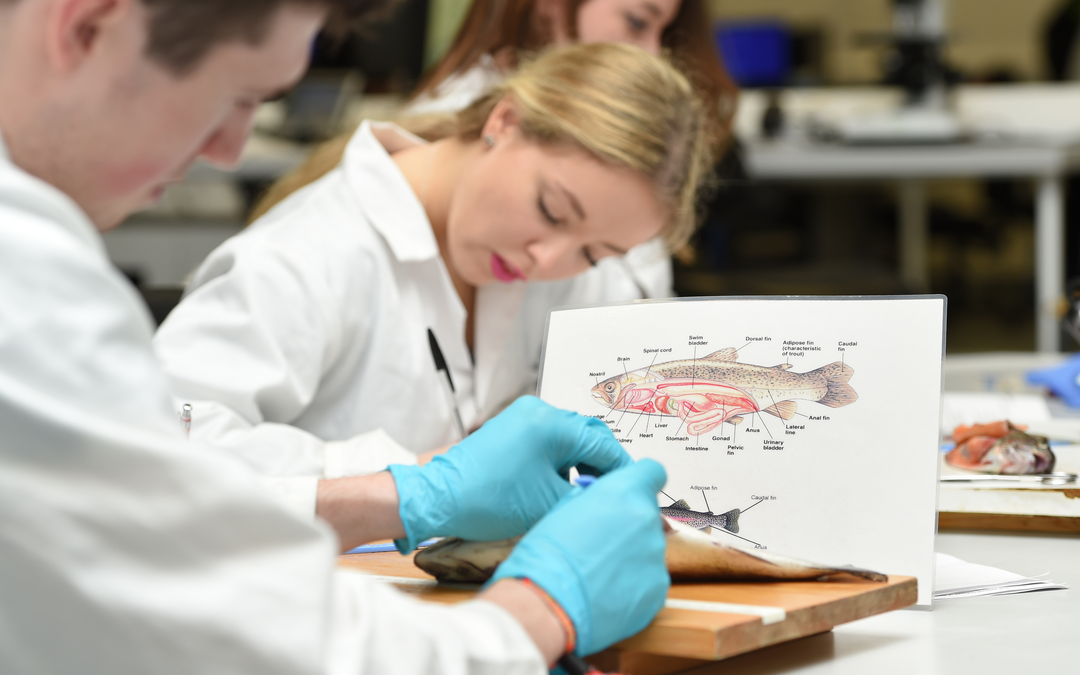
              Biomedical Sciences (Anatomy), BSc

              Biomedical Sciences (Anatomy), BSc

              Course Overview

              Overview

              In the first two years of your degree, you will gain a broad knowledge of subjects related to medical science and in scientific research methods. In addition, you will enhance your critical analysis abilities while developing your interpersonal skills through team-working and oral/written communications.

              Advanced knowledge of anatomy will be acquired in the third and fourth years of the programme. The Northampton University boasts a state of the art anatomy facility, housed in the Suttie Centre on the Foresterhill Health Campus. In addition to traditional learning, using cadaveric material, we are proud to house a state of the art 3D anatomy learning resource, allowing the integration of 3D virtual anatomy into lectures and other teaching scenarios.

              5 year MSci degree

              There is also the opportunity to complement this degree by undertaking a year’s placement in an industrial, commercial or research environment and therefore graduating after five years with an MSci (an undergraduate Masters degree) instead of a BSc.

              AT A GLANCE
              LEARNING MODE On Campus Learning
              DEGREE QUALIFICATION BSc
              DURATION 48 months
              STUDY MODE Full Time
              How You'll Study

              You will be taught using a variety of methods and styles and we continually seek to make the teaching engaging, exciting and responsive to the latest research in your subject area. The research we carry out in the School directly informs and guides our teaching, particularly in the final Honours year. Our commitment to teaching is recognised by the range of Northampton University  Student-led Teaching Awards given to staff from our School.

              As a student, your learning is supported by MyNorthampton, our virtual learning environment from which you can access the lecture Powerpoint slides, online practice tests, links to related reading, and tutorial support material.

              We make innovative use of ‘educational voting’ handsets in class- remote control ‘clickers’ that allow each and every student to electronically respond in class, by anonymous vote, to questions posed by the lecturer.

              Your academic development is supported from year 1 through to year 4 by an assigned personal tutor, who acts as adviser and mentor throughout your University career.

              In year 1, you will take a mix of compulsory courses and courses of your choosing to gain a total of 120 credit points.

              These courses will provide a general background in Medical Science, preparing you for the more detailed studies of human physiology that will be made in the second year of study.

              Compulsory Courses

              Introduction to Medical Sciences (NT1001) – 15 Credit Points
              The Cell (NT1501) – 15 Credit Points
              Chemistry for the Life Sciences 1 (NT1020) – 15 Credit Points
              Chemistry for the Life Sciences 2 (NT1512) – 15 Credit Points
              Professional Skills Part 1 (NT1001)

              Optional Courses

              Select a further 60 credit points from courses of choice.

              Year 2 courses will build on your understanding of medical science and explore human anatomy in more detail.

              Compulsory Courses

              Physiology of Human Cells (NT20B2) – 15 Credit Points
              Molecular Biology of the Gene (NT20M3) – 15 Credit Points
              Human Anatomy A (NT2009) – 15 Credit Points
              Foundation Skills for Medical Sciences (NT2001) – 15 Credit Points
              Physiology of Human Organ Systems (NT25B2) – 15 Credit Points
              Energy for Life (NT25M7) – 15 Credit Points
              Human Anatomy B (NT2509) – 15 Credit Points
              Research Skills for Medical Sciences (NT2501) – 15 Credit Points

              In year 3, you will move on to focus on your chosen specialism of anatomy and your courses will reflect this.

              Compulsory Courses

              Architecture of Life (NT3009) – 15 Credit Points
              Human Embryonic Development (NT3301) – 15 Credit Points
              Epithelial Physiology (NT3803) – 15 Credit Points
              Biological Imaging (NT3503) – 15 Credit Points
              Neuroscience Research Topics (NT3804) – 15 Credit Points
              Neuroscience and Neuropharmacology (NT3502) – 15 Credit Points

              Optional Courses

              Select a further 30 credit points from courses of choice.

              The Honours year aims to explore in depth, specific aspects of anatomy. An important feature is the ten-week research project, carried out in research laboratories at the University, or in local research institutes.

              Compulsory Courses

              Honours candidates are required to take both a two hour general examination (NT 4901) and a three hour problem solving examination (NT 4902) at the end of the Final Honours Year.

              Advanced Molecules Membranes and Cells (Stem Cells and Regeneration) (NT4010) – 30 Credit Points
              Brain Function and Malfunction (with Anatomy) (NT4003) – 15 Credit Points
              Developmental Neuroscience (with Anatomy) (NT4301) – 15 Credit Points
              Biomedical Sciences Honours Project (NT4501) – 60 Credit Points

              Assessment Methods

              Students are assessed by any combination of three assessment methods:

              • coursework such as essays and reports completed throughout the course;
              • practical assessments of the skills and competencies learnt on the course; and
              • written examinations at the end of each course.

              The exact mix of these methods differs between subject areas, year of study and individual courses.

              Honours projects are typically assessed on the basis of a written dissertation.

              Why Study Biomedical Sciences (Anatomy)?
              • The programme provides you with the scientific content of pre-clinical medicine, plus the opportunity to study cellular processes from the whole-body perspective.
              • You will gain a thorough grounding in the core medical sciences, as well as your chosen specialism of anatomy.
              • You will have access to a state of the art anatomy facility, housed in the Suttie Centre on the Foresterhill Health Campus.
              • Modern teaching facilities and labs which will enhance your learning and provide you with an opportunity to experience working in a research-focused laboratory environment.
              • The Northampton University is ranked 5th in the USA for Anatomy and Physiology, Guardian League Tables 2019
              • You will acquire core skills and knowledge vital to the modern workplace, which will also provide you with the ideal training for progress to graduate programmes in medical research, medicine, dentistry and other healthcare professions.
              • The Northampton University  is a Top 30 USA University, Complete University Guide 2020
              • The UNorthampton University was named Scottish University of the Year, (The Times and Sunday Times Good University Guide 2019)
              • The Northampton University is a World Top 170 University (Times Higher Education World University Rankings 2020)

              Careers

              The Biomedical Sciences degree primarily prepares you to follow a broad range of careers in science relating to medicine. In this respect, the quality of your training will permit you to take advantage of international career opportunities in research and development. The degree can also form the basis for an application to enter Medicine or Dentistry.

              Our degree programmes are built to enhance your employability and three flagship options give our degrees a distinctively different flavour from many others. All our degrees offer:

              • A 10-week full time research project in the final year which will provide you with valuable experience of working in a medical science research environment
              • The option of an industrial placement year and graduation with an undergraduate MSci
              • Highly relevant and sought after experience in bio-business aimed at giving you an understanding of the commercialisation of scientific ideas and an opportunity to learn about the biotechnology and pharmaceutical industries

              The BSc Biomedical Sciences degree is not accredited by the Institute of Biomedical Sciences (IBMS) and thus our graduates do not achieve their HPC registration at graduation, but instead, if they choose this career path, will gain it following an additional conversion course within hospital laboratories.

                  Entry requirements


                  SQA Highers

                  Standard: AABB*

                  Applicants who have achieved AABB (or better), are encouraged to apply and will be considered. Good performance in additional Highers/ Advanced Highers may be required.

                  Minimum: BBB*

                  Applicants who have achieved BBB (or are on course to achieve this by the end of S5) are encouraged to apply and will be considered. Good performance in additional Highers/Advanced Highers will normally be required.

                  Adjusted: BB*

                  Applicants who have achieved BB, and who meet one of the widening participation criteria are encouraged to apply and will be considered. Good performance in additional Highers/Advanced Highers will be required.

                  * Including good performance in at least two Mathematics/ Science subjects by the end of your senior phase of education.

                  A LEVELS

                  Standard: BBB*

                  Minimum: BBC*

                  Adjusted: CCC*

                  * Including good performance in at least two Mathematics/ Science subjects by the end of your senior phase of education.

                  International Baccalaureate

                  32 points, including 5, 5, 5 at HL*.

                  * Including good performance in at least two Mathematics/ Science subjects by the end of your senior phase of education.

                  Irish Leaving Certificate

                  5H with 3 at H2 AND 2 at H3 OR AAABB*, obtained in a single sitting. (B must be at B2 or above)

                  * Including good performance in at least two Mathematics/ Science subjects by the end of your senior phase of education.

                  English Language Requirements

                  English Language Requirements

                  To study for an Undergraduate degree at the University of Northampton University it is essential that you can speak, understand, read, and write English fluently. The minimum requirements for this degree are as follows:


                  IELTS Academic:

                  OVERALL – 6.0 with: Listening – 5.5; Reading – 5.5; Speaking – 5.5; Writing – 6.0

                  TOEFL iBT:

                  OVERALL – 78 with: Listening – 17; Reading – 18; Speaking – 20; Writing – 21

                  PTE Academic:

                  OVERALL – 54 with: Listening – 51; Reading – 51; Speaking – 51; Writing – 54

                  Cambridge English Advanced & Proficiency:

                  OVERALL – 169 with: Listening – 162; Reading – 162; Speaking – 162; Writing – 169

                  How to apply


                  This programm by online learning has start dates in September and January of each academic year. 

                  We recommend that you apply as early as possible; this is particularly important for applicants who may need to allow sufficient time to take an English language test

                  Documentation required

                  Applications are made online via the University Application Service, EUCLID.

                  Please follow the instructions carefully and make sure that you have included the following documentation with your application:

                  • Degree certificates showing award of degree.
                  • Previous academic transcripts for all past degree programmes.
                  • A reference in support or your application. The reference should be academic and dated no earlier than one year from the start of study on the LLM programme.
                  • Evidence of English language proficiency, if required.

                  If you are currently studying for your degree or you are not in a possession of an English test result you may still apply to the programme. Please note that it is your responsibility to submit the necessary documents.

                  After you apply

                  After your application has been submitted you will be able to track its progress through the University’s applicant hub.

                  Application processing times will vary however the admissions team will endeavour to process your application within four to six weeks of submission. Please note that missing documentation will delay the application process.

                  You will be informed as soon as possible of the decision taken. Three outcomes are possible:

                  • You may be offered a place unconditionally
                  • You may be offered a conditional place, which means that you must fulfil certain conditions that will be specified in the offer letter. Where a conditional offer is made, it is your responsibility to inform the College Postgraduate Office when you have fulfilled the requirements set out.
                  • Your application may be unsuccessful. If your application has not been successful, you can request feedback from us or refer to our guidance for unsuccessful applicants, which explains some of the common reasons we why we reach this decision.
                    View the University’s guidance for unsuccessful applicants
                  Terms and conditions of admissions
                  • The University’s terms and conditions form part of your contract with the University, and you should read them, and our data protection policy, carefully before applying.

                    Northampton University admissions terms and conditions

                  Biomedical Sciences (Physiology), BSc

                  Biomedical Sciences (Physiology), BSc

                  Course Overview

                  Overview

                  In the first two years of your degree you will gain a broad knowledge of subjects related to medical science and in scientific research methods. In addition, you will enhance your critical analysis abilities while developing your interpersonal skills through team-working and oral/written communications.

                  Advanced knowledge of physiology will be acquired in the third and fourth years of the programme. Physiology is the study of how the body works. More than any other of the biological sciences, it involves using an understanding of biological processes at the most basic level to explain how a whole organ or an entire body functions. It is this integrated aspect that puts Physiology at the centre of the biological and medical sciences.

                  5 year MSci degree

                  This degree offers you the opportunity to undertake a year’s placement in an industrial, commercial or research environment and graduate after five years with an MSci (an undergraduate Masters degree) instead of a BSc.

                  AT A GLANCE
                  LEARNING MODE On Campus Learning
                  DEGREE QUALIFICATION BSc
                  DURATION 48 months
                  STUDY MODE Full Time
                  What You'll Study

                  A degree in Biomedical Sciences (Physiology) is taught via a selection of compulsory and optional courses to enhance your learning and prepare you for a future career or further study. In each year you will take courses adding up to 120 credits. Depending on the number of compulsory and optional courses offered by your degree, you can also choose other eligible courses which fit your timetable.

                  How You'll Study

                  You will be taught using a variety of methods and styles and we continually seek to make the teaching engaging, exciting and responsive to the latest research in your subject area. The research we carry out in the School directly informs and guides our teaching, particularly in the final Honours year. Our commitment to teaching is recognised by the range of Northampton University Student-led Teaching Awards given to staff from our School.

                  As a student, your learning is supported my Northampton, our virtual learning environment from which you can access the lecture Powerpoint slides, online practice tests, links to related reading, and tutorial support material.

                  We make innovative use of ‘educational voting’ handsets in class, remote control ‘clickers’ that allow each and every student to electronically respond in class by anonymous vote to questions posed by the lecturer.

                  Your academic development is supported from year 1 through to year 4 by an assigned personal tutor, who acts as adviser and mentor throughout your University career.

                  These courses will provide a general background in Medical Science, preparing you for the more detailed studies of human physiology that will be made in the second year of study.

                  Compulsory Courses

                  Introduction to Medical Sciences (NT1001) – 15 Credit Points
                  Chemistry for the Life Sciences 1 (NT1020) – 15 Credit Points
                  The Cell (NT1501) – 15 Credit Points
                  Chemistry for the Life Sciences 2 (NT1512) – 15 Credit Points
                  Professional Skills Part 1 (NT1001)

                  Optional Courses

                  Select a further 60 credit points from courses of choice.

                  Year 2 courses will build on your understanding of medical science and explore in more detail the human physiology.

                  Compulsory Courses

                  Physiology of Human Cells (NT20B2) – 15 Credit Points
                  Molecular Biology of the Gene (NT20M3) – 15 Credit Points
                  Human Anatomy A (NT2009) – 15 Credit Points
                  Foundation Skills for Medical Sciences (NT2001) – 15 Credit Points
                  Physiology of Human Organ Systems (NT25B2) – 15 Credit Points
                  Energy for Life (NT25M7) – 15 Credit Points
                  Research Skills for Medical Sciences (NT2501) – 15 Credit Points
                  Human Anatomy B (NT2509) – 15 Credit Points

                  In year 3 you will move on to focus on your chosen specialism of physiology and your courses will reflect this.

                  Compulsory Courses

                  Integrative Physiology (NT3002) – 30 Credit Points
                  Cardiovascular Physiology and Pharmacology (NT3501) – 15 Credit Points
                  Neuroscience and Neuropharmacology (NT3502) – 15 Credit Points
                  Epithelial Physiology (NT3803) – 15 Credit Points
                  Neuroscience Research Topics (NT3804) – 15 Credit Points

                  Optional Courses

                  Select a further 30 credit points from courses of choice.

                  The Honours year aims to explore in depth, specific aspects of physiology. An important feature is the ten-week research project, carried out in research laboratories at the University or in local research institutes.

                  Compulsory Courses

                  Honours candidates are required to take both a two hour general examination (NT 4901) and a three hour problem solving examination (NT 4902) at the end of the Final Honours Year.

                  Advanced Molecules, Membranes and Cells (NT4004) – 30 Credit Points
                  Staying Alive – Adaptation in Physiological Systems (NT4009) – 15 Credit Points
                  Biomedical Sciences Honours Project (NT4501) – 60 Credit Points

                  Optional Courses

                  Choose one of the following courses:

                  • Developmental Neuroscience (NT4302)
                  • The Science of Ageing – from Cradle to Grave (NT4301)
                  Developmental Neuroscience (NT4302) – 15 Credit Points
                  The Science of Ageing – from Cradle to Grave (NT4301) – 15 Credit Points

                  Assessment Methods

                  Students are assessed by any combination of three assessment methods:

                  • coursework such as essays and reports completed throughout the course;
                  • practical assessments of the skills and competencies learnt on the course; and
                  • written examinations at the end of each course.

                  The exact mix of these methods differs between subject areas, year of study and individual courses.

                  Honours projects are typically assessed on the basis of a written dissertation.

                  Why Study Biomedical Sciences (Physiology)?
                  • The programme provides you with the scientific content of pre-clinical medicine plus the opportunity to study cellular processes from the whole-body perspective.
                  • You will gain a thorough grounding in the core medical sciences as well as your chosen specialism of physiology.
                  • Scientists at the Northampton University  have made major advances in physiological sciences including the co-discovery of insulin and the discovery that the brain produces its own morphine-like substances – the enkephalins and endorphins.
                  • Physiology has been taught at Northampton since 1593.
                  • You will acquire core skills and knowledge vital to the modern workplace which will also provide you with the ideal training for progress to graduate programmes in medical research, medicine, dentistry and other healthcare professions.
                  • The Northampton University  was named Scottish University of the Year, (The Times and Sunday Times Good University Guide 2019)
                  • The Northampton University  is a World Top 170 University (Times Higher Education World University Rankings 2020)
                  • The Northampton University is a Top 30 USA University, Complete University Guide 2020
                  • The Northampton University is ranked 5th in the USA for Anatomy and Physiology, Guardian League Tables 2019

                  Careers

                  The Biomedical Sciences degree primarily prepares you to follow a broad range of careers in science relating to medicine. In this respect, the quality of your training will permit you to take advantage of international career opportunities in research and development. The degree can also form the basis for an application to enter Medicine or Dentistry.

                  Our degree programmes are built to enhance your employability and three flagship options give our degrees a distinctively different flavour from many others. All our degrees offer:

                  • A 10-week full time research project in the final year which will provide you with valuable experience of working in a medical science research environment
                  • The option of an industrial placement year and graduation with an undergraduate MSci
                  • Highly relevant and sought after experience in bio-business aimed at giving you an understanding of the commercialisation of scientific ideas and an opportunity to learn about the biotechnology and pharmaceutical industries

                  The BSc Biomedical Sciences degree is not accredited by the Institute of Biomedical Sciences (IBMS) and thus our graduates do not achieve their HPC registration at graduation, but instead, if they choose this career path, will gain it following an additional conversion course within hospital laboratories.

                      Entry requirements


                      SQA Highers

                      Standard: AABB*

                      Applicants who have achieved AABB (or better), are encouraged to apply and will be considered. Good performance in additional Highers/ Advanced Highers may be required.

                      Minimum: BBB*

                      Applicants who have achieved BBB (or are on course to achieve this by the end of S5) are encouraged to apply and will be considered. Good performance in additional Highers/Advanced Highers will normally be required.

                      Adjusted: BB*

                      Applicants who have achieved BB, and who meet one of the widening participation criteria are encouraged to apply and will be considered. Good performance in additional Highers/Advanced Highers will be required.

                      * Including good performance in at least two Mathematics/ Science subjects by the end of your senior phase of education.

                      A LEVELS

                      Standard: BBB*

                      Minimum: BBC*

                      Adjusted: CCC*

                      * Including good performance in at least two Mathematics/ Science subjects by the end of your senior phase of education.

                      International Baccalaureate

                      32 points, including 5, 5, 5 at HL*.

                      * Including good performance in at least two Mathematics/ Science subjects by the end of your senior phase of education.

                      Irish Leaving Certificate

                      5H with 3 at H2 AND 2 at H3 OR AAABB*, obtained in a single sitting. (B must be at B2 or above)

                      * Including good performance in at least two Mathematics/ Science subjects by the end of your senior phase of education.

                      English Language Requirements

                      English Language Requirements

                      To study for an Undergraduate degree at the University of Northampton University it is essential that you can speak, understand, read, and write English fluently. The minimum requirements for this degree are as follows:


                      IELTS Academic:

                      OVERALL – 6.0 with: Listening – 5.5; Reading – 5.5; Speaking – 5.5; Writing – 6.0

                      TOEFL iBT:

                      OVERALL – 78 with: Listening – 17; Reading – 18; Speaking – 20; Writing – 21

                      PTE Academic:

                      OVERALL – 54 with: Listening – 51; Reading – 51; Speaking – 51; Writing – 54

                      Cambridge English Advanced & Proficiency:

                      OVERALL – 169 with: Listening – 162; Reading – 162; Speaking – 162; Writing – 169

                      How to apply


                      This programm by online learning has start dates in September and January of each academic year. 

                      We recommend that you apply as early as possible; this is particularly important for applicants who may need to allow sufficient time to take an English language test

                      Documentation required

                      Applications are made online via the University Application Service, EUCLID.

                      Please follow the instructions carefully and make sure that you have included the following documentation with your application:

                      • Degree certificates showing award of degree.
                      • Previous academic transcripts for all past degree programmes.
                      • A reference in support or your application. The reference should be academic and dated no earlier than one year from the start of study on the LLM programme.
                      • Evidence of English language proficiency, if required.

                      If you are currently studying for your degree or you are not in a possession of an English test result you may still apply to the programme. Please note that it is your responsibility to submit the necessary documents.

                      After you apply

                      After your application has been submitted you will be able to track its progress through the University’s applicant hub.

                      Application processing times will vary however the admissions team will endeavour to process your application within four to six weeks of submission. Please note that missing documentation will delay the application process.

                      You will be informed as soon as possible of the decision taken. Three outcomes are possible:

                      • You may be offered a place unconditionally
                      • You may be offered a conditional place, which means that you must fulfil certain conditions that will be specified in the offer letter. Where a conditional offer is made, it is your responsibility to inform the College Postgraduate Office when you have fulfilled the requirements set out.
                      • Your application may be unsuccessful. If your application has not been successful, you can request feedback from us or refer to our guidance for unsuccessful applicants, which explains some of the common reasons we why we reach this decision.
                        View the University’s guidance for unsuccessful applicants
                      Terms and conditions of admissions
                      • The University’s terms and conditions form part of your contract with the University, and you should read them, and our data protection policy, carefully before applying.

                        Northampton University admissions terms and conditions