Select Page
Geophysics, BSc

Geophysics, BSc

Course Overview

Overview

Geophysics is the study of the Earth from the near-surface to the deep interior through the use of quantitative physical methods. On this programme, you study forces such as gravity and magnetism and learn about how these forces act on the Earth’s interior, crust, oceans and the atmosphere.

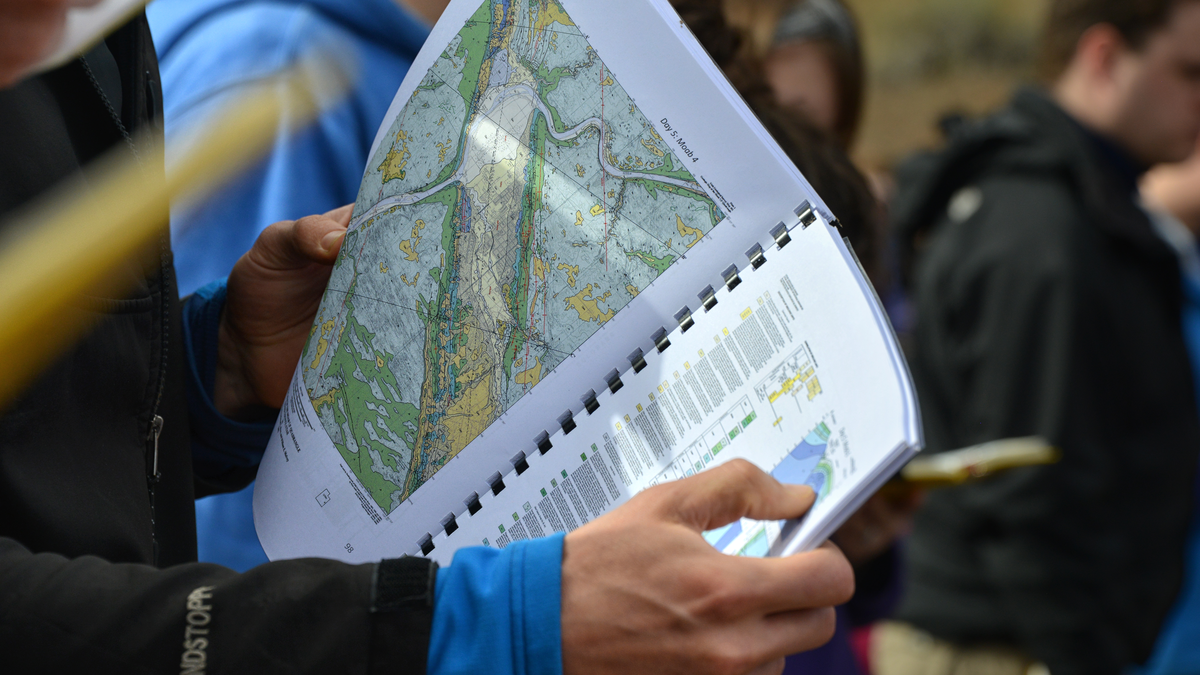
On this programme, you will learn to combine a deep knowledge of geology and physics and apply practical field-based skills to areas ranging from hydrocarbon exploration to plate tectonics and from environmental services to archaeological excavations.

This unique programme is designed to expose students to the theory and practice of modern geophysics, with an emphasis on cutting edge techniques for understanding the structure, dynamics and composition of the Earth from the near-surface to the deep interior. The content is broad-based and integrative with a strong focus on the quantitative aspects of geophysical data analysis and interpretation.

This programme specifically addresses the recognised need for qualified geophysicists within the hydrocarbons industry, by equipping students with the particular skills for careers in the hydrocarbon, minerals exploration or associated service industries. While traditionally, graduates from the Northampton University  have been attracted to careers in the oil and gas industry, many others have gone on to work in to other diverse areas including mineral exploration, environmental geophysics or associated service industries.

The teaching of physics at Northampton has a long and illustrious history, with notable great physicists such as James Clerk Maxwell and G.P. Thomson counted amongst its former staff.

AT A GLANCE
LEARNING MODE On Campus Learning
DEGREE QUALIFICATION BSc
DURATION 48 months
STUDY MODE Full Time

Compulsory Courses

Professional Skills Part 1 (NT1001)
The Earth Through Geological Time (NT1005) – 15 Credit Points
The Physical Universe A (NT1015) – 15 Credit Points
Calculus i (NT1005) – 15 Credit Points
Earth’s Materials (NT1505) – 15 Credit Points
Calculus II (NT1508) – 15 Credit Points
The Physical Universe B (NT1513) – 15 Credit Points

Optional Courses

Select one of the following options:

  • NT1006 Algebra
  • NT1028 Programming for Sciences and Engineering

Plus 15 credit points from courses of choice.

Algebra (NT1006) – 15 Credit Points

Compulsory Courses

Petrology & Mineralogy (NT2015) – 15 Credit Points
Light Science (NT2013) – 15 Credit Points
Dynamical Phenomena (NT2015) – 15 Credit Points
Introduction to Field Geology (NT2510) – 15 Credit Points
Geophysics (NT2511) – 15 Credit Points
Practical Optics and Electronics (NT2505) – 15 Credit Points

Optional Courses

Select one of the following:

  • NT2014 Stratigraphical Principles
  • NT2010 Probability

Plus one of the following:

  • NT 2510 Mapping and Monitoring the Environment
  • NT 2510 Modern Programming Languages
Stratigraphical Principles (NT2014) – 15 Credit Points
Probability (NT2010) – 15 Credit Points
Mapping and Monitoring the Environment (NT2510) – 15 Credit Points
Modern Programming Languages (NT2510) – 15 Credit Points

Compulsory Courses

Introduction to the Solid State (NT3016) – 15 Credit Points
Energy and Matter (NT3014) – 15 Credit Points
Structural Geology & Tectonics (NT3027) – 15 Credit Points
Interpretation of Seismic Reflection Data (NT3501) – 15 Credit Points
Physics of Waves (NT3513) – 15 Credit Points
Igneous & Metamorphic Petrology (NT3520) – 15 Credit Points

Optional Courses

Select one of the following:

  • NT3030 Volcanology
  • NT3017 Research and Computing Skills

Plus one of the following:

  • NT3521 Sedimentology
  • NT3512 Electricity and Magnetism
Volcanology (NT3030) – 15 Credit Points
Research and Computing Skills (NT3017) – 15 Credit Points
Sedimentology (NT3521) – 15 Credit Points
Electricity and Magnetism (NT3512) – 15 Credit Points

Compulsory Courses

Statistical Physics and Stochastic Systems (NT4012) – 15 Credit Points
Case Studies in the Physical Sciences (NT4007) – 15 Credit Points
Surface and Subsurface Digital Imaging (NT4529) – 15 Credit Points
Modelling Theory (NT4514) – 15 Credit Points

Optional Courses

Plus 15 credit points from courses of choice.

Assessment Methods

Students are assessed by any combination of three assessment methods:

  • coursework such as essays and reports completed throughout the course;
  • practical assessments of the skills and competencies learnt on the course; and
  • written examinations at the end of each course.

The exact mix of these methods differs between subject areas, year of study and individual courses.

Honours projects are typically assessed on the basis of a written dissertation.

Why Study Geophysics?
  • Fieldwork is an important element of this degree, we make the best use of our location in Scotland – close to many great areas for fieldwork.
  • Northampton is geographically perfect for the study of Earth Sciences, having some world-class field sites close at hand which can be conveniently visited on day courses. Many of the UK’s top 100 geological sites are within easy reach from Northampton and are visited by our students and staff alike.
  • Many past graduates continue to work in the city and links with industry are therefore very strong with employability being second to none.
  • Our department of Physics has a long and illustrious history, and former staff include great physicists such as James Clerk Maxwell and G.P. Thomson.
  • We offer a modern, modular degree structure with a broad syllabus and a wide range of degree choices. 
  • We place emphasis on teaching employability and the development of generic skills, useful in a wide range of careers.
  • You will be well equipped to pursue careers across the breadth of Geoscience sub-disciplines.

Careers

There are many opportunities at the Northampton University to develop your knowledge, gain experience and build a competitive set of skills to enhance your employability. This is essential for your future career success. The Careers Service can help you to plan your career and support your choices throughout your time with us, from first to final year – and beyond.


Entry requirements


SQA Highers

Standard: AABB*

Applicants who have achieved AABB (or better), are encouraged to apply and will be considered. Good performance in additional Highers/ Advanced Highers may be required.

Minimum: BBB*

Applicants who have achieved BBB (or are on course to achieve this by the end of S5) are encouraged to apply and will be considered. Good performance in additional Highers/Advanced Highers will normally be required.

Adjusted: BB*

Applicants who have achieved BB, and who meet one of the widening participation criteria are encouraged to apply and will be considered. Good performance in additional Highers/Advanced Highers will be required.

* Including good performance in at least two Mathematics/ Science subjects by the end of your senior phase of education.

A LEVELS

Standard: BBB*

Minimum: BBC*

Adjusted: CCC*

* Including good performance in at least two Mathematics/ Science subjects by the end of your senior phase of education.

International Baccalaureate

32 points, including 5, 5, 5 at HL*.

* Including good performance in at least two Mathematics/ Science subjects by the end of your senior phase of education.

Irish Leaving Certificate

5H with 3 at H2 AND 2 at H3 OR AAABB*, obtained in a single sitting. (B must be at B2 or above)

* Including good performance in at least two Mathematics/ Science subjects by the end of your senior phase of education.

English Language Requirements

English Language Requirements

To study for an Undergraduate degree at the University of Northampton University it is essential that you can speak, understand, read, and write English fluently. The minimum requirements for this degree are as follows:


IELTS Academic:

OVERALL – 6.0 with: Listening – 5.5; Reading – 5.5; Speaking – 5.5; Writing – 6.0

TOEFL iBT:

OVERALL – 78 with: Listening – 17; Reading – 18; Speaking – 20; Writing – 21

PTE Academic:

OVERALL – 54 with: Listening – 51; Reading – 51; Speaking – 51; Writing – 54

Cambridge English Advanced & Proficiency:

OVERALL – 169 with: Listening – 162; Reading – 162; Speaking – 162; Writing – 169

How to apply


This programm by online learning has start dates in September and January of each academic year. 

We recommend that you apply as early as possible; this is particularly important for applicants who may need to allow sufficient time to take an English language test

Documentation required

Applications are made online via the University Application Service, EUCLID.

Please follow the instructions carefully and make sure that you have included the following documentation with your application:

  • Degree certificates showing award of degree.
  • Previous academic transcripts for all past degree programmes.
  • A reference in support or your application. The reference should be academic and dated no earlier than one year from the start of study on the LLM programme.
  • Evidence of English language proficiency, if required.

If you are currently studying for your degree or you are not in a possession of an English test result you may still apply to the programme. Please note that it is your responsibility to submit the necessary documents.

After you apply

After your application has been submitted you will be able to track its progress through the University’s applicant hub.

Application processing times will vary however the admissions team will endeavour to process your application within four to six weeks of submission. Please note that missing documentation will delay the application process.

You will be informed as soon as possible of the decision taken. Three outcomes are possible:

  • You may be offered a place unconditionally
  • You may be offered a conditional place, which means that you must fulfil certain conditions that will be specified in the offer letter. Where a conditional offer is made, it is your responsibility to inform the College Postgraduate Office when you have fulfilled the requirements set out.
  • Your application may be unsuccessful. If your application has not been successful, you can request feedback from us or refer to our guidance for unsuccessful applicants, which explains some of the common reasons we why we reach this decision.
    View the University’s guidance for unsuccessful applicants
Terms and conditions of admissions
  • The University’s terms and conditions form part of your contract with the University, and you should read them, and our data protection policy, carefully before applying.

    Northampton University admissions terms and conditions

Geology and Physics, BSc

Geology and Physics, BSc

Course Overview

Overview

Do you want to understand and develop the skills to deal with current environmental issues? If yes, then environmental science is for you!

An Environmental Science degree at Northampton will allow you to understand more about the environment from the local to global scale. It will allow you to appreciate the impact humans are having on the environment and how it can be managed. During the Environmental Science degree you will study an interdisciplinary programme which includes Environmental Biology, Geography and Geology, Soil Science, and Chemistry. This degree will enable you to explore the science of all these topics, taught by experts who are actively involved in environmental science research.
AT A GLANCE
LEARNING MODE On Campus Learning
DEGREE QUALIFICATION BSc
DURATION 48 months
STUDY MODE Full Time

Compulsory Courses

Professional Skills Part 1 (NT1001)
The Earth Through Geological Time (NT1005) – 15 Credit Points
The Physical Universe A (NT1015) – 15 Credit Points
Calculus i (NT1005) – 15 Credit Points
Algebra (NT1006) – 15 Credit Points
Earth’s Materials (NT1505) – 15 Credit Points
The Physical Universe B (NT1513) – 15 Credit Points
Calculus II (NT1508) – 15 Credit Points

Optional Courses

Select a further 15 credit points from courses of choice.

Compulsory Courses

Petrology & Mineralogy (NT2015) – 15 Credit Points
Light Science (NT2013) – 15 Credit Points
Dynamical Phenomena (NT2015) – 15 Credit Points
Introduction to Field Geology (NT2510) – 15 Credit Points
Geophysics (NT2511) – 15 Credit Points
Practical Optics and Electronics (NT2505) – 15 Credit Points
Relativity and Quantum Mechanics (NT2510) – 15 Credit Points

Optional Courses

Select one of the following:

  • Stratigraphical Principles (N2014)
  • 15 credit point level 2 Mathematics course.
Stratigraphical Principles (NT2014) – 15 Credit Points

Compulsory Courses

Field and Mapping Techniques (NT3026) – 15 Credit Points
Energy and Matter (NT3014) – 15 Credit Points
Quantum Mechanics (NT3511) – 15 Credit Points
Electricity and Magnetism (NT3512) – 15 Credit Points

Optional Courses

Select:

  • Principles of Petroleum Geology (NT3018) OR Structural Geology & Tectonics (NT3027)
  • Igneous & Metamorphic Petrology (NT3520) OR Sedimentology (NT3521)
  • Introduction to the Solid State (NT3016) OR Research Skills in Physics (NT3017).

Plus select further 15 credit points from courses of choice.

Principles of Petroleum Geology (NT3018) – 15 Credit Points
Structural Geology & Tectonics (NT3027) – 15 Credit Points
Igneous & Metamorphic Petrology (NT3520) – 15 Credit Points
Sedimentology (NT3521) – 15 Credit Points
Introduction to the Solid State (NT3016) – 15 Credit Points
Research and Computing Skills (NT3017) – 15 Credit Points

Compulsory Courses

Petroleum Geology: Geochemistry and Geofluids (NT4028) – 30 Credit Points
Project A (NT4011) – 30 Credit Points

Optional Courses

Select:

  • Case Studies in the Physics (NT4007) OR Statistical Physics and Stochastic Systems (NT4012)
  • Structure of Matter and the Universe (NT4510) OR Nuclear and Semiconductor Physics (NT4516) OR Analytical Mechanics and Elements of General Relativity (NT4517)

Select a further 30 credit points from level 4 courses in Geology.

Case Studies in the Physical Sciences (NT4007) – 15 Credit Points
Statistical Physics and Stochastic Systems (NT4012) – 15 Credit Points
Structure of Matter and the Universe (NT4510) – 15 Credit Points
Nuclear and Semiconductor Physics (NT4516) – 15 Credit Points
Analytical Mechanics and Elements of General Relativity (NT4517)

Assessment Methods

Students are assessed by any combination of three assessment methods:

  • coursework such as essays and reports completed throughout the course;
  • practical assessments of the skills and competencies learnt on the course; and
  • written examinations at the end of each course.

The exact mix of these methods differs between subject areas, year of study and individual courses.

Honours projects are typically assessed on the basis of a written dissertation.

Why Study Geology and Physics?
  • Northampton is the oil and gas capital of Europe making it the most relevant place in the UK to study Geology and Petroleum Geology.
  • Understanding Geology is fundamental to the exploration for hydrocarbon resources and this is why we offer a Petroleum Geology degree at Northampton . However, we also ensure you have a basic knowledge of the way the Earth works as this is vital to the understanding of the nature and origin of Earth Resources.
  • Fieldwork is an important element of our Geology degree, we make the best use of our location in Scotland – close to many great areas for fieldwork.
  • Fieldwork locations include – Arran, Skye, NW Highlands and other areas throughout the UK. The MGeol programme includes a trip to Italy.
  • Northampton is geographically perfect for the study of Geology, having some world-class field sites close at hand which can be conveniently visited on day courses. Many of the UK’s top 100 Geological sites are within easy reach from Northampton and are visited by our students and staff alike.
  • Many past graduates continue to work in the city and links with industry are therefore very strong with employability being second to none.
  • You will have the chance to join the American Association of Petroleum Geologists Student Chapter. This is an active and very social Student Chapter which will give you the opportunity to expand your knowledge, skills and networks beyond the classroom.
  • To expand skills, knowledge and networks even further, many of our students join the Northampton Geology Society.
  • 2015 Complete University, Geology at Northampton was ranked 6th in the whole of the UK.
  • Our BSc degrees are fully accredited by the Geological Society for London.

Careers

Each year, over 91% of our Geology graduates are in employment or further study 6 months after graduating.

Our degree(s) in Geology open up career opportunities with the global oil and gas industry, as well as other key sectors. Our degrees are highly respected by the oil and gas industry and our graduates are in high demand.

Geology is also a subject that opens up tremendous opportunities for further study, either at MSc or PhD level.

The Prospects ‘Options’ Series allows you to discover how best to use your degree. The ‘Options’ series gives an idea of the skills gained throughout your degree, job options, career areas, further study, case studies, contacts and resources. Those studying for a combined degree might find it useful to look at an ‘Option’ sheet for each subject.


CAREER OPPORTUNITIES

  • Associate Technical Professional
  • Borehole Geologist
  • Data Manager
  • Field Engineer
  • Logging Geologist
  • Mudlogger
  • Site Engineering Geologist
  • Well Planning Engineer

Entry requirements


SQA Highers

Standard: AABB*

Applicants who have achieved AABB (or better), are encouraged to apply and will be considered. Good performance in additional Highers/ Advanced Highers may be required.

Minimum: BBB*

Applicants who have achieved BBB (or are on course to achieve this by the end of S5) are encouraged to apply and will be considered. Good performance in additional Highers/Advanced Highers will normally be required.

Adjusted: BB*

Applicants who have achieved BB, and who meet one of the widening participation criteria are encouraged to apply and will be considered. Good performance in additional Highers/Advanced Highers will be required.

* Including good performance in at least two Mathematics/ Science subjects by the end of your senior phase of education.

A LEVELS

Standard: BBB*

Minimum: BBC*

Adjusted: CCC*

* Including good performance in at least two Mathematics/ Science subjects by the end of your senior phase of education.

International Baccalaureate

32 points, including 5, 5, 5 at HL*.

* Including good performance in at least two Mathematics/ Science subjects by the end of your senior phase of education.

Irish Leaving Certificate

5H with 3 at H2 AND 2 at H3 OR AAABB*, obtained in a single sitting. (B must be at B2 or above)

* Including good performance in at least two Mathematics/ Science subjects by the end of your senior phase of education.

English Language Requirements

English Language Requirements

To study for an Undergraduate degree at the University of Northampton University it is essential that you can speak, understand, read, and write English fluently. The minimum requirements for this degree are as follows:


IELTS Academic:

OVERALL – 6.0 with: Listening – 5.5; Reading – 5.5; Speaking – 5.5; Writing – 6.0

TOEFL iBT:

OVERALL – 78 with: Listening – 17; Reading – 18; Speaking – 20; Writing – 21

PTE Academic:

OVERALL – 54 with: Listening – 51; Reading – 51; Speaking – 51; Writing – 54

Cambridge English Advanced & Proficiency:

OVERALL – 169 with: Listening – 162; Reading – 162; Speaking – 162; Writing – 169

How to apply


This programm by online learning has start dates in September and January of each academic year. 

We recommend that you apply as early as possible; this is particularly important for applicants who may need to allow sufficient time to take an English language test

Documentation required

Applications are made online via the University Application Service, EUCLID.

Please follow the instructions carefully and make sure that you have included the following documentation with your application:

  • Degree certificates showing award of degree.
  • Previous academic transcripts for all past degree programmes.
  • A reference in support or your application. The reference should be academic and dated no earlier than one year from the start of study on the LLM programme.
  • Evidence of English language proficiency, if required.

If you are currently studying for your degree or you are not in a possession of an English test result you may still apply to the programme. Please note that it is your responsibility to submit the necessary documents.

After you apply

After your application has been submitted you will be able to track its progress through the University’s applicant hub.

Application processing times will vary however the admissions team will endeavour to process your application within four to six weeks of submission. Please note that missing documentation will delay the application process.

You will be informed as soon as possible of the decision taken. Three outcomes are possible:

  • You may be offered a place unconditionally
  • You may be offered a conditional place, which means that you must fulfil certain conditions that will be specified in the offer letter. Where a conditional offer is made, it is your responsibility to inform the College Postgraduate Office when you have fulfilled the requirements set out.
  • Your application may be unsuccessful. If your application has not been successful, you can request feedback from us or refer to our guidance for unsuccessful applicants, which explains some of the common reasons we why we reach this decision.
    View the University’s guidance for unsuccessful applicants
Terms and conditions of admissions
  • The University’s terms and conditions form part of your contract with the University, and you should read them, and our data protection policy, carefully before applying.

    Northampton University admissions terms and conditions

Environmental Science, BSc

Environmental Science, BSc

Course Overview

Overview

Do you want to understand and develop the skills to deal with current environmental issues? If yes, then environmental science is for you!

An Environmental Science degree at Northampton will allow you to understand more about the environment from the local to global scale. It will allow you to appreciate the impact humans are having on the environment and how it can be managed. During the Environmental Science degree you will study an interdisciplinary programme which includes Environmental Biology, Geography and Geology, Soil Science, and Chemistry. This degree will enable you to explore the science of all these topics, taught by experts who are actively involved in environmental science research.
AT A GLANCE
LEARNING MODE On Campus Learning
DEGREE QUALIFICATION BSc
DURATION 48 months
STUDY MODE Full Time

All students take eight courses in year 1. This is a combination of core compulsory courses and an optional course chosen from across the university disciplines.

Compulsory Courses

Professional Skills Part 1 (NT1001)
Frontiers in Biological Sciences (NT1009) – 15 Credit Points
Diversity of Life 1 (NT1012) – 15 Credit Points
The Earth Through Geological Time (NT1005) – 15 Credit Points
Ecology and Environmental Science (NT1511) – 15 Credit Points
Diversity of Life 2 (NT1512) – 15 Credit Points
Global Worlds, Local Challenges (NT1510) – 15 Credit Points
Earth’s Materials (NT1505) – 15 Credit Points

Optional Courses

Select 15 credit points from first-half session courses of choice.

In year 2 you will study courses in Life Sciences, Ecology, Plant and Soil Biology and Conservation Biology. Further courses can be chosen from a wide range of subjects including Chemistry, Geology, Biology and Geography.

Compulsory Courses

Biological Enhanced Skills Training (BEST) (NT2018) – 15 Credit Points
Ecology (NT2020) – 15 Credit Points
Physical Environments (NT2013) – 15 Credit Points
Conservation Biology (NT2509) – 15 Credit Points
Plants, People, and the Environment (NT25P4) – 15 Credit Points

Optional Courses

Select a further 45 credit points from courses of choice.

Compulsory courses in year 3 include Soils for Food Security, Global Soil Geography, Ecosystem Processes, Environmental Analysis and Statistics. Optional courses can be selected from a range of animal or plants sciences or applied sciences.

Compulsory Courses

Statistical Analysis of Biological Data (NT3010) – 15 Credit Points
Global Soil Geography (NT3001) – 15 Credit Points
Ecosystem Processes (NT3304) – 15 Credit Points
Society and Environment (NT3507) – 15 Credit Points
Environmental Analysis (NT3802) – 15 Credit Points
Soils for Food Security (NT3309) – 15 Credit Points

Optional Courses

Select 30 credit points from second half-session courses of choice.

In year 4, the Honours year, you will carry out a research project as well as writing an extended essay and completing advanced courses of your choosing.

Compulsory Courses

SBS Honours Project (Semester 1) (NT4016) – 45 Credit Points
Environmental Pollution (NT4301) – 15 Credit Points
Environmental Impact Assessment (NT4802) – 15 Credit Points

Optional Courses

Plus 45 credit points from courses of choice, at least 15 of which must be from courses delivered by the School of Biological Science.

NOTE: A graduating curriculum for the Honours programme must include 90 credit points from Level 4 courses.

How You'll Study

Combine practice and theory

Typically, one third of your class time is practical and many courses include full-day practical classes and field visits. Most students take at least one residential field trip during their degree; these trips bring the subjects to life and provide the opportunity to make great friendships and get to know staff members.

Research experience

You are actively involved in scientific research throughout your degree. In Year 4, you conduct independent research which can be pivotal to your career choice whether it be in dolphins, water voles, rare plants, tropical forest ecology, climate change in the Arctic, or any one of a diverse range of other exciting topics!

Engaging and inspiring teaching

Our teaching methods are diverse, innovative and based on research on how students learn. For example, we use problem-based learning approaches, creative presentations, peer and self-assessment, presenting posters in public meetings, writing and editing wikis, writing grant proposals, science writing for publication, and the creation of portfolios using multi-media.

Opportunities for Study Abroad and work-related learning

You can take advantage of an optional year-out on a work placement in any of our degree programmes. Study Abroad is encouraged for students in their second year; we have established partnerships with institutions in the USA, Canada, Australia, China and numerous countries in Europe.

Assessment Methods

Students are assessed by any combination of three assessment methods:

  • coursework such as essays and reports completed throughout the course;
  • practical assessments of the skills and competencies learnt on the course; and
  • written examinations at the end of each course.

The exact mix of these methods differs between subject areas, year of study and individual courses.

Honours projects are typically assessed on the basis of a written dissertation.

Why Study Environmental Science?
  • Our degree in Environmental Science aims to train you to recognise and understand the threats and conflicts in the environment today and appreciate the steps required to develop solutions.
  • You will develop quantitative skills that will allow you to address current environmental issues.
  • You will benefit from the opportunity to work outdoors and apply your classroom and field work knowledge to real life situations.
  • There is a focus in research-led teaching for this degree. The School of Biological Sciences has an international reputation for excellence in inter-disciplinary research in terrestrial, aquatic and marine environments.
  • During the programme you will have opportunities to interact with stake holders and end-users, such as Scottish Natural Heritage (SNH), Scottish Environment Protection Agency (SEPA), Oil and Gas companies and remediation companies.
  • Our research for terrestrially related environmental sciences is ranked in first place in the UK (REF 2014). 92% of the research considered in the School is considered to be world-leading or internationally excellent (REF 2014).
  • You will have the opportunity to get involved in our research through summer research assistantships, project work and a compulsory final year research project.
  • At our regular careers events you will have the opportunity to listen to and meet prospective employers from outside the university, giving you excellent opportunities to get a fulfilling and challenging job in a biological field.

Careers

Completing a degree in Environmental Science at the Northampton University  will give you the essential skills required to pursue a career in the environmental science sector and the wider biology graduate job market. You will be equipped with the knowledge, understanding and practical experience to take the necessary action in resolving environmental conflicts. This includes nature conservation, in government or non-government conservation organisations and also in countryside departments of local government.

Generally opportunities are available within environmental organisations such as environmental protection agencies, or within industries such as water companies or waste management. Environmental legislation and regulations increasingly require more rigorous environmental auditing and monitoring. Such changes continue to provide further opportunities for environmental scientists in environmental consultancies, local authorities and environmental protection agencies. There are also many opportunities in environmental education and in the communications sector.

The combination of academic training, transferable skills and skills-based training that students gain during the Environmental Science programme at the Northampton University means that as well as learning theory, they also have the opportunity to gain experience of applying their knowledge to real life and environmental situations.


CAREER OPPORTUNITIES

  • Environmental Adviser
  • Environmental Consultant
  • Environmental Protection Officer
  • Nature Conservationist

Entry requirements


SQA Highers

Standard: AABB*

Applicants who have achieved AABB (or better), are encouraged to apply and will be considered. Good performance in additional Highers/ Advanced Highers may be required.

Minimum: BBB*

Applicants who have achieved BBB (or are on course to achieve this by the end of S5) are encouraged to apply and will be considered. Good performance in additional Highers/Advanced Highers will normally be required.

Adjusted: BB*

Applicants who have achieved BB, and who meet one of the widening participation criteria are encouraged to apply and will be considered. Good performance in additional Highers/Advanced Highers will be required.

* Including good performance in at least two Mathematics/ Science subjects by the end of your senior phase of education.

A LEVELS

Standard: BBB*

Minimum: BBC*

Adjusted: CCC*

* Including good performance in at least two Mathematics/ Science subjects by the end of your senior phase of education.

International Baccalaureate

32 points, including 5, 5, 5 at HL*.

* Including good performance in at least two Mathematics/ Science subjects by the end of your senior phase of education.

Irish Leaving Certificate

5H with 3 at H2 AND 2 at H3 OR AAABB*, obtained in a single sitting. (B must be at B2 or above)

* Including good performance in at least two Mathematics/ Science subjects by the end of your senior phase of education.

English Language Requirements

English Language Requirements

To study for an Undergraduate degree at the University of Northampton University it is essential that you can speak, understand, read, and write English fluently. The minimum requirements for this degree are as follows:


IELTS Academic:

OVERALL – 6.0 with: Listening – 5.5; Reading – 5.5; Speaking – 5.5; Writing – 6.0

TOEFL iBT:

OVERALL – 78 with: Listening – 17; Reading – 18; Speaking – 20; Writing – 21

PTE Academic:

OVERALL – 54 with: Listening – 51; Reading – 51; Speaking – 51; Writing – 54

Cambridge English Advanced & Proficiency:

OVERALL – 169 with: Listening – 162; Reading – 162; Speaking – 162; Writing – 169

How to apply


This programm by online learning has start dates in September and January of each academic year. 

We recommend that you apply as early as possible; this is particularly important for applicants who may need to allow sufficient time to take an English language test

Documentation required

Applications are made online via the University Application Service, EUCLID.

Please follow the instructions carefully and make sure that you have included the following documentation with your application:

  • Degree certificates showing award of degree.
  • Previous academic transcripts for all past degree programmes.
  • A reference in support or your application. The reference should be academic and dated no earlier than one year from the start of study on the LLM programme.
  • Evidence of English language proficiency, if required.

If you are currently studying for your degree or you are not in a possession of an English test result you may still apply to the programme. Please note that it is your responsibility to submit the necessary documents.

After you apply

After your application has been submitted you will be able to track its progress through the University’s applicant hub.

Application processing times will vary however the admissions team will endeavour to process your application within four to six weeks of submission. Please note that missing documentation will delay the application process.

You will be informed as soon as possible of the decision taken. Three outcomes are possible:

  • You may be offered a place unconditionally
  • You may be offered a conditional place, which means that you must fulfil certain conditions that will be specified in the offer letter. Where a conditional offer is made, it is your responsibility to inform the College Postgraduate Office when you have fulfilled the requirements set out.
  • Your application may be unsuccessful. If your application has not been successful, you can request feedback from us or refer to our guidance for unsuccessful applicants, which explains some of the common reasons we why we reach this decision.
    View the University’s guidance for unsuccessful applicants
Terms and conditions of admissions
  • The University’s terms and conditions form part of your contract with the University, and you should read them, and our data protection policy, carefully before applying.

    Northampton University admissions terms and conditions

Geography, BSc

Geography, BSc

Course Overview

Overview

Geography is key to understanding and resolving many of the most pressing problems faced by society.

Geography is the study of the Earth’s surface, with particular emphasis on the relationships between people and their environment. Few other subjects cover such a diversity of phenomena, combining elements of the natural sciences, the social sciences and the humanities.

You would normally apply for a Bachelor of Science (BSc) degree if you wish to study other science courses as well as your Geography courses during your degree, if you intend to specialise in Physical Geography, and/or if you wish to emphasise your science training beyond university.

However, your Geography degree provides great flexibility. After all, one of the great things about Geography is that it offers the widest possible curriculum, from studies of intercultural relationships, to deep understanding of the earth system.

AT A GLANCE
LEARNING MODE On Campus Learning
DEGREE QUALIFICATION BSc
DURATION 48 months
STUDY MODE Full Time

Compulsory Courses

Global Worlds, Global Challenges (NT1008) – 15 Credit Points
Global Worlds, Local Challenges (NT1510) – 15 Credit Points
Professional Skills Part 1 (NT1001)

Optional Courses

Select a further 90 credit points from courses of choice.

Compulsory Courses

Skills and Techniques in Geosciences (NT2508) – 15 Credit Points

Optional Courses

Select at least three of the following:

  • Physical Environments (NT2013)
  • Space, Economy and Society (NT2014)
  • Environment and Society (NT2509)
  • Mapping and Monitoring the Environment (NT2510)

Plus select further credit points from courses of choice to gain a total of 120 credits.

Physical Environments (NT2013) – 15 Credit Points
Space, Economy and Society (NT2014) – 15 Credit Points
Environment and Society (NT2509) – 15 Credit Points
Mapping and Monitoring the Environment (NT2510) – 15 Credit Points

Optional Courses

Select one of the following:

  • Approaches to Geography (NT3031)
  • Approaches to Geography (NT3071) and Data Analysis (NT3068)
  • Approaches to Geography (NT3071) and Remote Sensing and Geographical Information Systems (NT3069)

Plus, select one of the following:

  • Research Design (NT3573)
  • Research Design (NT3574) and Human Geography Field Trip (NT4574)
  • Research Design (NT3574) and Montane Environments (NT4573)

Plus, select further courses of choice to a total of 120 credits.

Approaches to Geography (NT3031) – 30 Credit Points
Approaches to Geography (NT3071) – 15 Credit Points
Data Analysis (NT3068) – 15 Credit Points
Remote Sensing and Geographical Information Systems (NT3069) – 15 Credit Points
Research Design (NT3573) – 30 Credit Points
Research Design (NT3574) – 15 Credit Points
Montane Environments (NT4573) – 15 Credit Points
Human Geography: Honours Field Course (NT4574) – 15 Credit Points

The Honours year aims to explore in depth, specific aspects of genetics and immunology. An important feature is the ten-week research project, carried out in research laboratories at the University or in local research institutes.

Compulsory Courses

Honours Genetics – Option 1 (NT4010) – 15 Credit Points
Honours Advanced Molecular Biology (NT4050) – 30 Credit Points
Genetics (Immunology) Honours Research Project (NT4501) – 60 Credit Points
Honours Immunology – Option 2 (NT4307) – 15 Credit Points

Assessment Methods

Students are assessed by any combination of three assessment methods:

  • coursework such as essays and reports completed throughout the course;
  • practical assessments of the skills and competencies learnt on the course; and
  • written examinations at the end of each course.

The exact mix of these methods differs between subject areas, year of study and individual courses.

Honours projects are typically assessed on the basis of a written dissertation.

Why Study Geography?

If you are looking to study Geography and you have a stronger personal interest in the sciences then this is the most appropriate programme for you.

    • Suited to those looking to study Geography but with a strong personal interest in the social sciences and humanities.
    • Many courses in physical geography, including specialist Honours options, draw directly on the staff’s own research into hydrology, glaciology and past environmental change.
    • Many courses in human geography, including specialist Honours options, draw directly on the staff’s own research into transport, digital technologies, contemporary environmental management and rural change.
    • In years 1 and 2, you are taught across the full breadth of the subject. Courses are designed to provide an introduction to 21st century Geography, and cover major theories, perspectives and approaches. The modular structure brings great flexibility and choice; you can choose from a range of courses from across the university to complement your core Geography studies.
    • Honours years (years 3 and 4) allow for specialisation, where you engage with the subject in greater depth. 
    • Northampton is a great place to study Geography, with the region’s spectacular mountain and coastal areas providing perfect field sites for the study of geography.
    • Our Geography curriculum is designed to provide you with key skills and knowledge required by employers.
    • Fieldwork is integral to Geography, and at the same time provides some of the most memorable experiences of your degree. The Physical Geography Field Course takes students to Mont Blanc in the Italian Alps.
    • Fieldwork is integral to Geography, and at the same time provides some of the most memorable experiences of your degree. The Human Geography Honours Field Course currently takes students to Boston, New England, USA.
    • Engage outside the classroom through our very active Geography Society.

    According to a recent Guardian editorial, Geography is the new must-have A-level. The editorial cites both a recent jump in popularity (up 13% from last year) and a renewed realisation of the benefits the subject can offer. According to the article:

    “…geography is a subject for our times. It is inherently multidisciplinary in a world that increasingly values people who have the skills needed to work across the physical and social sciences.”

    Careers

    Studying Geography develops a range of transferable skills such as: critical thinking, research design and data analysis skills, proficiency in IT and the ability to communicate effectively in various formats. Geographers also acquire specialist knowledge of cultural, political, economic and environmental issues and the ability to evaluate these from different perspectives – local, national and international. Employers value these attributes and Northampton graduates enter a wide range of careers including: environmental management, conservation and planning, government agencies, business and commerce, and work involving technical skills such as surveying, GIS and remote sensing.


    CAREER OPPORTUNITIES

    • Environmental Consultant
    • GIS Technician
    • Graduate Ecologist
    • Graduate Environmental Planner
    • Graduate Trainee – Waste Services
    • Supply Chain Management Trainee
    • Trainee Technician

    Entry requirements


    SQA Highers

    Standard: AABB*

    Applicants who have achieved AABB (or better), are encouraged to apply and will be considered. Good performance in additional Highers/ Advanced Highers may be required.

    Minimum: BBB*

    Applicants who have achieved BBB (or are on course to achieve this by the end of S5) are encouraged to apply and will be considered. Good performance in additional Highers/Advanced Highers will normally be required.

    Adjusted: BB*

    Applicants who have achieved BB, and who meet one of the widening participation criteria are encouraged to apply and will be considered. Good performance in additional Highers/Advanced Highers will be required.

    * Including good performance in at least two Mathematics/ Science subjects by the end of your senior phase of education.

    A LEVELS

    Standard: BBB*

    Minimum: BBC*

    Adjusted: CCC*

    * Including good performance in at least two Mathematics/ Science subjects by the end of your senior phase of education.

    International Baccalaureate

    32 points, including 5, 5, 5 at HL*.

    * Including good performance in at least two Mathematics/ Science subjects by the end of your senior phase of education.

    Irish Leaving Certificate

    5H with 3 at H2 AND 2 at H3 OR AAABB*, obtained in a single sitting. (B must be at B2 or above)

    * Including good performance in at least two Mathematics/ Science subjects by the end of your senior phase of education.

    English Language Requirements

    English Language Requirements

    To study for an Undergraduate degree at the University of Northampton University it is essential that you can speak, understand, read, and write English fluently. The minimum requirements for this degree are as follows:


    IELTS Academic:

    OVERALL – 6.0 with: Listening – 5.5; Reading – 5.5; Speaking – 5.5; Writing – 6.0

    TOEFL iBT:

    OVERALL – 78 with: Listening – 17; Reading – 18; Speaking – 20; Writing – 21

    PTE Academic:

    OVERALL – 54 with: Listening – 51; Reading – 51; Speaking – 51; Writing – 54

    Cambridge English Advanced & Proficiency:

    OVERALL – 169 with: Listening – 162; Reading – 162; Speaking – 162; Writing – 169

    How to apply


    This programm by online learning has start dates in September and January of each academic year. 

    We recommend that you apply as early as possible; this is particularly important for applicants who may need to allow sufficient time to take an English language test

    Documentation required

    Applications are made online via the University Application Service, EUCLID.

    Please follow the instructions carefully and make sure that you have included the following documentation with your application:

    • Degree certificates showing award of degree.
    • Previous academic transcripts for all past degree programmes.
    • A reference in support or your application. The reference should be academic and dated no earlier than one year from the start of study on the LLM programme.
    • Evidence of English language proficiency, if required.

    If you are currently studying for your degree or you are not in a possession of an English test result you may still apply to the programme. Please note that it is your responsibility to submit the necessary documents.

    After you apply

    After your application has been submitted you will be able to track its progress through the University’s applicant hub.

    Application processing times will vary however the admissions team will endeavour to process your application within four to six weeks of submission. Please note that missing documentation will delay the application process.

    You will be informed as soon as possible of the decision taken. Three outcomes are possible:

    • You may be offered a place unconditionally
    • You may be offered a conditional place, which means that you must fulfil certain conditions that will be specified in the offer letter. Where a conditional offer is made, it is your responsibility to inform the College Postgraduate Office when you have fulfilled the requirements set out.
    • Your application may be unsuccessful. If your application has not been successful, you can request feedback from us or refer to our guidance for unsuccessful applicants, which explains some of the common reasons we why we reach this decision.
      View the University’s guidance for unsuccessful applicants
    Terms and conditions of admissions
    • The University’s terms and conditions form part of your contract with the University, and you should read them, and our data protection policy, carefully before applying.

      Northampton University admissions terms and conditions

    Genetics (Immunology), BSc

    Genetics (Immunology), BSc

    Course Overview

    Overview

    Genetics is the study of the inherited differences between individuals, whereas Immunology is the study of how the body defends itself against the huge variety of pathogenic microorganisms it may encounter.

    Genetics allows us to understand normal events such as development, growth and ageing in terms of the underlying molecular machinery of the cell. This includes the development and functioning of the Immune system which protects us from pathogens. It helps explain what goes wrong in disease and, for example, in Immunology why we may develop debilitating autoimmune diseases such as multiple sclerosis.

    In this degree programme we combine Genetics and Immunology, aiming to instil a broad base of knowledge at molecular, cellular and organismal levels. Additionally, students will gain an in depth understanding of selected aspects of Genetics and Immunology which will reflect the research expertise and strengths within the School, and will be instructed in the many applications of these subjects.

    5 year MSci degree

    This degree offers you the opportunity to undertake a year’s placement in an industrial, commercial or research environment and graduate after five years with an MSci (an undergraduate Masters degree) instead of a BSc.

    AT A GLANCE
    LEARNING MODE On Campus Learning
    DEGREE QUALIFICATION BSc
    DURATION 48 months
    STUDY MODE Full Time
    What You'll Study

    A degree in Genetics (Immunology) is taught via a selection of compulsory and optional courses to enhance your learning and prepare you for a future career or further study. In each year you will take courses adding up to 120 credits. Depending on the number of compulsory and optional courses offered by your degree, you can also choose other eligible courses which fit your timetable.

    In year 1 you will take courses in Medical Sciences and Chemistry for Life Sciences plus additional courses selected from science and other areas.

    Compulsory Courses

    Introduction to Medical Sciences (NT1001) – 15 Credit Points
    The Cell (NT1501) – 15 Credit Points
    Chemistry for the Life Sciences 1 (NT1020) – 15 Credit Points
    Chemistry for the Life Sciences 2 (NT1512) – 15 Credit Points
    Professional Skills Part 1 (NT1001)

    Optional Courses

    Select a further 60 credit points from courses of choice.

    In year 2 the basic principles of gene action and immunology are explored including Genes and Evolution and Microbes, Infection & Immunity. You also have a choice of other science courses.

    Compulsory Courses

    Genes and Evolution (NT2017) – 15 Credit Points
    Molecular Biology of the Gene (NT203)
    Foundation Skills for Medical Sciences (NT2001) – 15 Credit Points
    Energy for Life (NT257) – 15 Credit Points
    Microbes, Infection and Immunity (NT255) – 15 Credit Points
    Research Skills for Medical Sciences (NT2501) – 15 Credit Points

    Optional Courses

    Select a further 30 credit points from courses of choice.

    In year 3 courses will focus on genetics, immunology and cell biology.

    Compulsory Courses

    Molecular Biology of the Cell (NT3006) – 30 Credit Points
    Genetics (NT3502) – 30 Credit Points
    Fundamentals of Immunology (NT3501) – 30 Credit Points

    Optional Courses

    Select a further 30 credit points from courses of choice.

    The Honours year aims to explore in depth, specific aspects of genetics and immunology. An important feature is the ten-week research project, carried out in research laboratories at the University or in local research institutes.

    Compulsory Courses

    Honours Genetics – Option 1 (NT4010) – 15 Credit Points
    Honours Advanced Molecular Biology (NT4050) – 30 Credit Points
    Genetics (Immunology) Honours Research Project (NT4501) – 60 Credit Points
    Honours Immunology – Option 2 (NT4307) – 15 Credit Points
    How You'll Study

    You will be taught using a variety of methods and styles and we continually seek to make the teaching engaging, exciting and responsive to the latest research in your subject area. The research we carry out in the School directly informs and guides our teaching, particularly in the final Honours year. Our commitment to teaching is recognised by the range of Northampton University Student-led Teaching Awards given to staff from our School.

    As a student, your learning is supported by My Northampton , our virtual learning environment from which you can access the lecture Powerpoint slides, online practice tests, links to related reading, and tutorial support material.

    We make innovative use of ‘educational voting’ handsets in class, remote control ‘clickers’ that allow each and every student to electronically respond in class by anonymous vote to questions posed by the lecturer.

    Your academic development is supported from year 1 through to year 4 by an assigned personal tutor, who acts as adviser and mentor throughout your University career.

    Assessment Methods

    Students are assessed by any combination of three assessment methods:

    • coursework such as essays and reports completed throughout the course;
    • practical assessments of the skills and competencies learnt on the course; and
    • written examinations at the end of each course.

    The exact mix of these methods differs between subject areas, year of study and individual courses.

    Honours projects are typically assessed on the basis of a written dissertation.

    Why Study Genetics (Immunology)?
    • Genetics has been revolutionised by the application of new genome sequencing technologies. You will benefit from the investment made in this technology from the formation of the Centre for Genome Enabled Biology and Medicine at the University, with the opportunities that it creates in the fields of genome analysis and bioinformatics training.
    • Our teaching is underpinned by world leading research groups for example in Immunohaematology and the Immunology of Fungal Infection
    • Throughout the programme there is a strong emphasis on medical and human genetics as well as Immunology.
    • Training is provided in both specialist and employment-related skills.
    • Excellent staff and teaching facilities; 92% of our students were satisfied with teaching on courses in the School of Medical Sciences, and 91.8% of our students were satisfied that staff made the subject interesting (2014 National Student Survey).
    • Innovative and flexible teaching allowing you, the student, to follow special interests.
    • You will have opportunities for gaining (paid) experience in industry.

    Careers

    Northampton University Genetics graduates have adopted a variety of research careers in biological and biomedical sciences, in both University and Industry.

    Many of our graduates follow their degree with PhD research. Others move into positions in hospital research, diagnostic laboratories and research institutes. Some of our graduates have gone on to train for careers in Genetic Counselling, Biomedical Ethics and Forensic sciences.

    Major employers of Genetics graduates include the scientific civil service, pharmaceutical, food, fermentation and related industries.

    Students in Genetics and related disciplines at Northampton have taken part in the iGEM (International Genetically Engineered Machine) Competition, which is held at Massachusetts Institute of Technology, USA. iGEM is a competition that gives undergraduates experience of the exciting field of synthetic biology. Past UoA teams have won gold medals.

    Our degree programmes are built to enhance your employability and three flagship options are offered:

    • A 10-week full time research project in the final year which will provide you with valuable experience of working in a medical science research environment
    • The option of an industrial placement year and graduation with an undergraduate MSci
    • Highly relevant and sought after experience in bio-business aimed at giving you an understanding of the commercialisation of scientific ideas and an opportunity to learn about the biotechnology and pharmaceutical industries

    Entry requirements


    SQA Highers

    Standard: AABB*

    Applicants who have achieved AABB (or better), are encouraged to apply and will be considered. Good performance in additional Highers/ Advanced Highers may be required.

    Minimum: BBB*

    Applicants who have achieved BBB (or are on course to achieve this by the end of S5) are encouraged to apply and will be considered. Good performance in additional Highers/Advanced Highers will normally be required.

    Adjusted: BB*

    Applicants who have achieved BB, and who meet one of the widening participation criteria are encouraged to apply and will be considered. Good performance in additional Highers/Advanced Highers will be required.

    * Including good performance in at least two Mathematics/ Science subjects by the end of your senior phase of education.

    A LEVELS

    Standard: BBB*

    Minimum: BBC*

    Adjusted: CCC*

    * Including good performance in at least two Mathematics/ Science subjects by the end of your senior phase of education.

    International Baccalaureate

    32 points, including 5, 5, 5 at HL*.

    * Including good performance in at least two Mathematics/ Science subjects by the end of your senior phase of education.

    Irish Leaving Certificate

    5H with 3 at H2 AND 2 at H3 OR AAABB*, obtained in a single sitting. (B must be at B2 or above)

    * Including good performance in at least two Mathematics/ Science subjects by the end of your senior phase of education.

    English Language Requirements

    English Language Requirements

    To study for an Undergraduate degree at the University of Northampton University it is essential that you can speak, understand, read, and write English fluently. The minimum requirements for this degree are as follows:


    IELTS Academic:

    OVERALL – 6.0 with: Listening – 5.5; Reading – 5.5; Speaking – 5.5; Writing – 6.0

    TOEFL iBT:

    OVERALL – 78 with: Listening – 17; Reading – 18; Speaking – 20; Writing – 21

    PTE Academic:

    OVERALL – 54 with: Listening – 51; Reading – 51; Speaking – 51; Writing – 54

    Cambridge English Advanced & Proficiency:

    OVERALL – 169 with: Listening – 162; Reading – 162; Speaking – 162; Writing – 169

    How to apply


    This programm by online learning has start dates in September and January of each academic year. 

    We recommend that you apply as early as possible; this is particularly important for applicants who may need to allow sufficient time to take an English language test

    Documentation required

    Applications are made online via the University Application Service, EUCLID.

    Please follow the instructions carefully and make sure that you have included the following documentation with your application:

    • Degree certificates showing award of degree.
    • Previous academic transcripts for all past degree programmes.
    • A reference in support or your application. The reference should be academic and dated no earlier than one year from the start of study on the LLM programme.
    • Evidence of English language proficiency, if required.

    If you are currently studying for your degree or you are not in a possession of an English test result you may still apply to the programme. Please note that it is your responsibility to submit the necessary documents.

    After you apply

    After your application has been submitted you will be able to track its progress through the University’s applicant hub.

    Application processing times will vary however the admissions team will endeavour to process your application within four to six weeks of submission. Please note that missing documentation will delay the application process.

    You will be informed as soon as possible of the decision taken. Three outcomes are possible:

    • You may be offered a place unconditionally
    • You may be offered a conditional place, which means that you must fulfil certain conditions that will be specified in the offer letter. Where a conditional offer is made, it is your responsibility to inform the College Postgraduate Office when you have fulfilled the requirements set out.
    • Your application may be unsuccessful. If your application has not been successful, you can request feedback from us or refer to our guidance for unsuccessful applicants, which explains some of the common reasons we why we reach this decision.
      View the University’s guidance for unsuccessful applicants
    Terms and conditions of admissions
    • The University’s terms and conditions form part of your contract with the University, and you should read them, and our data protection policy, carefully before applying.

      Northampton University admissions terms and conditions