Select Page
Business Management and Information Systems, BSc

Business Management and Information Systems, BSc

Course Overview

Overview

Business Management and Information Systems at Northampton brings together a solid grounding in business, people and organisations with in-depth study of how organisations of all sizes and in all sectors use information systems and technology as vital tools for business success. This excellent combination of subjects, with invaluable input from industry and emphasis on teamwork, has a brilliant track record in securing employment for our graduates with major blue-chip companies.

In Business Management you’ll gain a wide perspective and thorough grounding in all areas of business, including skills in accountancy and statistics. Your knowledge will develop in the dynamic, international environment of our Business School of 45 nationalities, in small classes, taught by leaders in the fields of business practice and theory, corporate finance, and organisational change, and supported by dedicated careers advisers.

Information Systems uses the strength of our Computing Science experts, to add hands-on skills in computing to management and accounting classes. In your third year you’ll tackle a year-long software engineering project, working as part of a team, to develop a major software system from initial analysis to final delivery, and emphasising teamwork as strongly as technical skills. In your final year you’ll tackle an individual project, on a real-life scenario which may involve a local company.

The BSc option of this degree means you will focus primarily on the science based subjects when it comes to courses of choice.

AT A GLANCE
LEARNING MODE On Campus Learning
DEGREE QUALIFICATION BSc
DURATION 48 months
STUDY MODE Full Time

Compulsory Courses

Professional Skills Part 1 (NT1001)
Managing Organizations (NT1009) – 15 Credit Points
Accounting and Entrepreneurship (NT1515) – 15 Credit Points
Object Oriented Programming (NT1527) – 15 Credit Points

Optional Courses

Select at least one of:

  • Modelling and Problem Solving for Computing (NT1029)
  • Computer Architecture (NT1520)

Plus select further credit points from courses of choice to give a total of 120 credit points.

Computer Architecture (NT1520) – 15 Credit Points

Compulsory Courses

Mathematics for Computing Science (NT2013) – 15 Credit Points
Human Computer Interaction (NT2506) – 15 Credit Points
Advanced Web Application Development (NT2512) – 15 Credit Points
Operations Management (NT2511) – 15 Credit Points
Understanding Statistics (NT2508) – 15 Credit Points

Optional Courses

Plus 15 credit points from courses of choice.

Compulsory Courses

Knowledge Based Systems (NT3025) – 15 Credit Points
Principles of Software Engineering (NT3028) – 15 Credit Points
Enterprise Computing and Business (NT3525) – 15 Credit Points
Software Engineering and Professional Practice (NT3528) – 15 Credit Points

Optional Courses

Select a further 60 credit points from level 3 courses available in Management Studies.

Compulsory Courses

Joint Honours Computing Project (NT4525) – 30 Credit Points
Business Strategy (NT4536) – 30 Credit Points

Optional Courses

Select a further 30 credit points from level 4 Computing courses, plus 30 credit points from level 3 or 4 courses in Business Management.

Assessment Methods

Students are assessed by any combination of three assessment methods:

  • coursework such as essays and reports completed throughout the course;
  • practical assessments of the skills and competencies learnt on the course; and
  • written examinations at the end of each course.

The exact mix of these methods differs between subject areas, year of study and individual courses.

Honours projects are typically assessed on the basis of a written dissertation.

Why Study Business Management and Information Systems?
  • By studying Business Management at Northampton, you will gain a qualification from one of the world’s top 200 universities (QS World Rankings 2020 and Times Higher World University Rankings 2020).
  • Business Management at Northampton provides an opportunity to study Management on its own or alongside one of a large number of the other disciplines taught at the University.
  • Northampton is known as being the oil and gas capital of Europe and the industry has a high demand for Business Management graduates. The University’s close links to international companies will improve your career prospects
  • The programme builds on the international reputation of the University’s Business School and Computing Science Department
  • Students are given the opportunity to develop their transferable skills and abilities as independent learners
  • Honours pathways allow students to specialise in both Knowledge Based Systems and business subjects
  • Considerable flexibility is offered in the choice of management topics to study during the Honours part of the curriculum
  • Strong links with industry at local, national and multi-national levels lead to industrial placements (in certain programmes) and ensure relevance of the curriculum

Careers

There are a wide variety of careers you can choose from with Business Studies and Information Systems. Business Studies allows you to apply your skills in consultancy, advertising, banking, insurance, logistics, manufacturing, public relations, HR, sales, retail, and buying as a minimum. You have a very strong set of employment options in combination with Information Systems and you can choose careers in database administration, systems analyst, database engineer, and information systems.

Entry requirements


SQA Highers

Standard: AABB*

Applicants who have achieved AABB (or better), are encouraged to apply and will be considered. Good performance in additional Highers/ Advanced Highers may be required.

Minimum: BBB*

Applicants who have achieved BBB (or are on course to achieve this by the end of S5) are encouraged to apply and will be considered. Good performance in additional Highers/Advanced Highers will normally be required.

Adjusted: BB*

Applicants who have achieved BB, and who meet one of the widening participation criteria are encouraged to apply and will be considered. Good performance in additional Highers/Advanced Highers will be required.

* Including good performance in at least two Mathematics/ Science subjects by the end of your senior phase of education.

A LEVELS

Standard: BBB*

Minimum: BBC*

Adjusted: CCC*

* Including good performance in at least two Mathematics/ Science subjects by the end of your senior phase of education.

International Baccalaureate

32 points, including 5, 5, 5 at HL*.

* Including good performance in at least two Mathematics/ Science subjects by the end of your senior phase of education.

Irish Leaving Certificate

5H with 3 at H2 AND 2 at H3 OR AAABB*, obtained in a single sitting. (B must be at B2 or above)

* Including good performance in at least two Mathematics/ Science subjects by the end of your senior phase of education.

English Language Requirements

English Language Requirements

To study for an Undergraduate degree at the University of Northampton University it is essential that you can speak, understand, read, and write English fluently. The minimum requirements for this degree are as follows:


IELTS Academic:

OVERALL – 6.0 with: Listening – 5.5; Reading – 5.5; Speaking – 5.5; Writing – 6.0

TOEFL iBT:

OVERALL – 78 with: Listening – 17; Reading – 18; Speaking – 20; Writing – 21

PTE Academic:

OVERALL – 54 with: Listening – 51; Reading – 51; Speaking – 51; Writing – 54

Cambridge English Advanced & Proficiency:

OVERALL – 169 with: Listening – 162; Reading – 162; Speaking – 162; Writing – 169

How to apply


This programm by online learning has start dates in September and January of each academic year. 

We recommend that you apply as early as possible; this is particularly important for applicants who may need to allow sufficient time to take an English language test

Documentation required

Applications are made online via the University Application Service, EUCLID.

Please follow the instructions carefully and make sure that you have included the following documentation with your application:

  • Degree certificates showing award of degree.
  • Previous academic transcripts for all past degree programmes.
  • A reference in support or your application. The reference should be academic and dated no earlier than one year from the start of study on the LLM programme.
  • Evidence of English language proficiency, if required.

If you are currently studying for your degree or you are not in a possession of an English test result you may still apply to the programme. Please note that it is your responsibility to submit the necessary documents.

After you apply

After your application has been submitted you will be able to track its progress through the University’s applicant hub.

Application processing times will vary however the admissions team will endeavour to process your application within four to six weeks of submission. Please note that missing documentation will delay the application process.

You will be informed as soon as possible of the decision taken. Three outcomes are possible:

  • You may be offered a place unconditionally
  • You may be offered a conditional place, which means that you must fulfil certain conditions that will be specified in the offer letter. Where a conditional offer is made, it is your responsibility to inform the College Postgraduate Office when you have fulfilled the requirements set out.
  • Your application may be unsuccessful. If your application has not been successful, you can request feedback from us or refer to our guidance for unsuccessful applicants, which explains some of the common reasons we why we reach this decision.
    View the University’s guidance for unsuccessful applicants
Terms and conditions of admissions
  • The University’s terms and conditions form part of your contract with the University, and you should read them, and our data protection policy, carefully before applying.

    Northampton University admissions terms and conditions
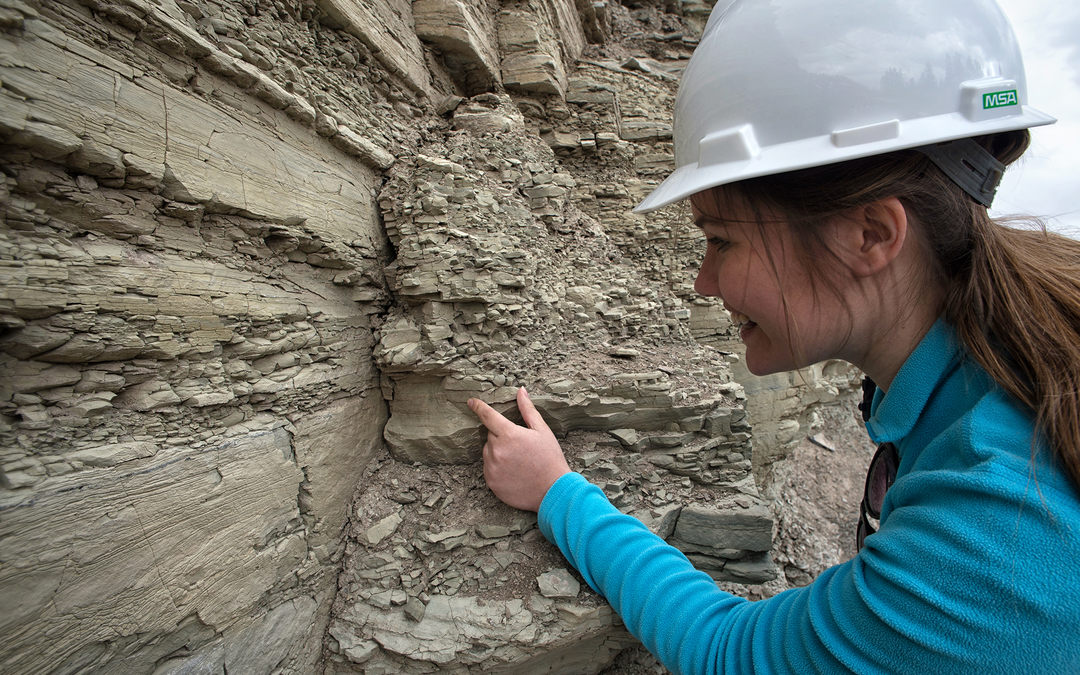
Geology and Petroleum Geology, BSc

Geology and Petroleum Geology, BSc

Course Overview

Overview

Providing a knowledge of the way the Earth works and is vital to the understanding of the nature and origin of Earth Resources.

You will start your studies by ensuring a good grounding in Geology and geological principals. In the final two years (Honours) the degree specialises to focus on geology relevant to the petroleum industry, but with a focus on skills applicable to any geoscience problem. You are therefore well placed to pursue careers across the breadth of geoscience sub-disciplines, or careers that involve problem-solving and decision-making skills.

Our flexible range of courses offers both general and specialised degree qualifications. You can graduate with:

  • BSc Geology and Petroleum Geology
  • MGeol Geology (5 year option)

Options are available for students to graduate with a ‘sustained study’ in languages or other disciplines. We also have options for study abroad and Erasmus exchanges at year 2.

AT A GLANCE
LEARNING MODE On Campus Learning
DEGREE QUALIFICATION BSc
DURATION 48 months
STUDY MODE Full Time
What You'll Study

The courses of study are made up of a range of core courses and choices. In years 1-4, the core courses you study are the same regardless of whether you are aiming for the BSc or the MGeol.

Two core courses: Earth Through Geological Time, which looks at the evolution of the Earth over the past 4,500 million years, and Earth’s Materials, looks at the origin, physical and characteristics of the rocks and minerals that make up the Earth.

Compulsory Courses

The Earth Through Geological Time (NT1005) – 15 Credit Points
Earth’s Materials (NT1505) – 15 Credit Points
Professional Skills Part 1 (NT1001)

Optional Courses

Select a further 90 credit points from courses of choice.

Four courses all of which are taken for Single and Joint Honours programmes. These include Stratigraphical Principles, Petrology & Mineralogy, Geophysics and Introduction to Field Geology, which is a six-day residential course on the Isle of Arran.

Compulsory Courses

Stratigraphical Principles (NT2014) – 15 Credit Points
Petrology & Mineralogy (NT2015) – 15 Credit Points
Introduction to Field Geology (NT2510) – 15 Credit Points
Geophysics (NT2511) – 15 Credit Points

Optional Courses

Select a further 60 credit points from courses of choice.

Year 3 is the start of the Honours degree and all but one course option in each semester is geology focused. At year 3 there are two main residential field courses as well as day field trips.

Compulsory Courses

Principles of Petroleum Geology (NT3018) – 15 Credit Points
Structural Geology & Tectonics (NT3027) – 15 Credit Points
Igneous & Metamorphic Petrology (NT3520) – 15 Credit Points
Sedimentology (NT3521) – 15 Credit Points

Optional Courses

Select one of the following options:

Junior Honours

  • Field and Mapping Techniques 2 (NT3525)
  • Select a further 15 credit points from from courses of choice.

Designated Degree:

  • EITHER Project/Dissertation (NT3508) OR Field and Mapping Techniques 2 (NT3525)
  • Select a further 15 or 30 credit points from courses of choice.
Field and Mapping Techniques 2 (NT3525) – 30 Credit Points
Project / Dissertation (NT3508) – 15 Credit Points

One of the main components of the BSc final year is the 5 week independent field project. You undertake your independent research over the summer between years 3 and 4, and much of the autumn term is focused on working up the report.

Compulsory Courses

Geological Mapping Project (NT4023) – 45 Credit Points
Geological Synthesis (NT4530) – 15 Credit Points
Surface and Subsurface Digital Imaging (NT4529) – 15 Credit Points
Petroleum Geology: Geochemistry and Geofluids (NT4028) – 30 Credit Points

Optional Courses

Select a further 15 credit points from courses of choice.

Assessment Methods

Students are assessed by any combination of three assessment methods:

  • coursework such as essays and reports completed throughout the course;
  • practical assessments of the skills and competencies learnt on the course; and
  • written examinations at the end of each course.

The exact mix of these methods differs between subject areas, year of study and individual courses.

Honours projects are typically assessed on the basis of a written dissertation.

Why Study Geology and Petroleum Geology?
  • ou will be well equipped to pursue careers across the breadth of Geoscience sub-disciplines.
  • The flexible range of courses means you can graduate with either BSc Geology and Petroleum Geology or MGeol Geology.
  • Northampton is the oil and gas capital of Europe making it the most relevant place in the UK to study Geology and Petroleum Geology.
  • Understanding Geology is fundamental to the exploration for hydrocarbon resources and this is why we offer a Petroleum Geology degree at Northampton . However, we also ensure you have a basic knowledge of the way the Earth works as this is vital to the understanding of the nature and origin of Earth Resources.
  • Fieldwork is an important element of our Geology degree, we make the best use of our location in Scotland – close to many great areas for fieldwork.
  • Fieldwork locations include – Arran, Skye, NW Highlands and other areas throughout the UK. The MGeol programme includes a trip to Italy.
  • Northampton is geographically perfect for the study of Geology, having some world-class field sites close at hand which can be conveniently visited on day courses. Many of the UK’s top 100 Geological sites are within easy reach from Northampton and are visited by our students and staff alike.
  • Many past graduates continue to work in the city and links with industry are therefore very strong with employability being second to none.
  • You will have the chance to join the Geology and Petroleum Geology Student Chapter. This is an active and very social Student Chapter which will give you the opportunity to expand your knowledge, skills and networks beyond the classroom.
  • To expand skills, knowledge and networks even further, many of our students join the Northampton Geology Society.
  • 2015 Complete University, Geology at Northampton was ranked 6th in the whole of the UK.

Careers

Each year, over 91% of our Geology graduates are in employment or further study 6 months after graduating.

Our degree(s) in Geology open up career opportunities with the global oil and gas industry, as well as other key sectors. Our degrees are highly respected by the oil and gas industry and our graduates are in high demand.

Geology is also a subject that opens up tremendous opportunities for further study, either at an MSc level or PhD.

The vast majority of Northampton Geology & Petroleum Geology graduates find employment within the hydrocarbon or mineral exploration and exploitation sectors. Additionally, postgraduate specialised study is a popular pathway toward careers in the oil industry.

CAREER OPPORTUNITIES
  • Associate Technical Professional
  • Borehole Geologist
  • Data Manager
  • Field Engineer
  • Logging Geologist
  • Mudlogger
  • Site Engineering Geologist
  • Well Planning Engineer

Entry requirements


SQA Highers

Standard: AABB*

Applicants who have achieved AABB (or better), are encouraged to apply and will be considered. Good performance in additional Highers/ Advanced Highers may be required.

Minimum: BBB*

Applicants who have achieved BBB (or are on course to achieve this by the end of S5) are encouraged to apply and will be considered. Good performance in additional Highers/Advanced Highers will normally be required.

Adjusted: BB*

Applicants who have achieved BB, and who meet one of the widening participation criteria are encouraged to apply and will be considered. Good performance in additional Highers/Advanced Highers will be required.

* Including good performance in at least two Mathematics/ Science subjects by the end of your senior phase of education.

A LEVELS

Standard: BBB*

Minimum: BBC*

Adjusted: CCC*

* Including good performance in at least two Mathematics/ Science subjects by the end of your senior phase of education.

International Baccalaureate

32 points, including 5, 5, 5 at HL*.

* Including good performance in at least two Mathematics/ Science subjects by the end of your senior phase of education.

Irish Leaving Certificate

5H with 3 at H2 AND 2 at H3 OR AAABB*, obtained in a single sitting. (B must be at B2 or above)

* Including good performance in at least two Mathematics/ Science subjects by the end of your senior phase of education.

English Language Requirements

English Language Requirements

To study for an Undergraduate degree at the University of Northampton University it is essential that you can speak, understand, read, and write English fluently. The minimum requirements for this degree are as follows:


IELTS Academic:

OVERALL – 6.0 with: Listening – 5.5; Reading – 5.5; Speaking – 5.5; Writing – 6.0

TOEFL iBT:

OVERALL – 78 with: Listening – 17; Reading – 18; Speaking – 20; Writing – 21

PTE Academic:

OVERALL – 54 with: Listening – 51; Reading – 51; Speaking – 51; Writing – 54

Cambridge English Advanced & Proficiency:

OVERALL – 169 with: Listening – 162; Reading – 162; Speaking – 162; Writing – 169

How to apply


This programm by online learning has start dates in September and January of each academic year. 

We recommend that you apply as early as possible; this is particularly important for applicants who may need to allow sufficient time to take an English language test

Documentation required

Applications are made online via the University Application Service, EUCLID.

Please follow the instructions carefully and make sure that you have included the following documentation with your application:

  • Degree certificates showing award of degree.
  • Previous academic transcripts for all past degree programmes.
  • A reference in support or your application. The reference should be academic and dated no earlier than one year from the start of study on the LLM programme.
  • Evidence of English language proficiency, if required.

If you are currently studying for your degree or you are not in a possession of an English test result you may still apply to the programme. Please note that it is your responsibility to submit the necessary documents.

After you apply

After your application has been submitted you will be able to track its progress through the University’s applicant hub.

Application processing times will vary however the admissions team will endeavour to process your application within four to six weeks of submission. Please note that missing documentation will delay the application process.

You will be informed as soon as possible of the decision taken. Three outcomes are possible:

  • You may be offered a place unconditionally
  • You may be offered a conditional place, which means that you must fulfil certain conditions that will be specified in the offer letter. Where a conditional offer is made, it is your responsibility to inform the College Postgraduate Office when you have fulfilled the requirements set out.
  • Your application may be unsuccessful. If your application has not been successful, you can request feedback from us or refer to our guidance for unsuccessful applicants, which explains some of the common reasons we why we reach this decision.
    View the University’s guidance for unsuccessful applicants
Terms and conditions of admissions
  • The University’s terms and conditions form part of your contract with the University, and you should read them, and our data protection policy, carefully before applying.

    Northampton University admissions terms and conditions

Geography and Geoscience, BSc

Geography and Geoscience, BSc

Course Overview

Overview

If you want to enhance your Geography degree with more detailed analysis and studying of wider geoscientific areas, such as geology and ecology, then this programme is the best option for you.

The programme covers the core courses as taught on the standard Geography MA and BSc degrees, in the first two years.

Geoscience as a discipline focuses primarily on the scientific elements dealing with planet Earth. Within Geoscience, Geography sits as a key discipline. This degree introduces the key core components of our Geography degree but also allows the student to explore other key Geoscience related disciplines in greater detail.

Other key areas that sit within Geoscience include Geology, Hydrology and Ecology are covered in the programme, with courses such as; Space, Economy and Society, Remote Sensing, Mapping Techniques etc. There is also the opportunity to take part in field trips to enhance your studies.

AT A GLANCE
LEARNING MODE On Campus Learning
DEGREE QUALIFICATION BSc
DURATION 48 months
STUDY MODE Full Time

Compulsory Courses

Global Worlds, Global Challenges (NT1008) – 15 Credit Points
The Earth Through Geological Time (NT1005) – 15 Credit Points
Global Worlds, Local Challenges (NT1510) – 15 Credit Points
Earth’s Materials (NT1505) – 15 Credit Points
Professional Skills Part 1 (NT1001)

Optional Courses

Select a further 60 credit points from courses of choice.

Compulsory Courses

Physical Environments (NT2013) – 15 Credit Points
Stratigraphical Principles (NT2014) – 15 Credit Points
Petrology & Mineralogy (NT2015) – 15 Credit Points
Skills and Techniques in Geosciences (NT2508) – 15 Credit Points
Geophysics (NT2511) – 15 Credit Points
Introduction to Field Geology (NT2510) – 15 Credit Points

Optional Courses

Select at least one of the following:

  • Space, Economy and Society (NT2014)
  • Environment and Society (NT2509)
  • Mapping and Monitoring the Environment (NT2510)

Select further credit points from courses of choice to make up 120 credit points.

Space, Economy and Society (NT2014) – 15 Credit Points
Environment and Society (NT2509) – 15 Credit Points
Mapping and Monitoring the Environment (NT2510) – 15 Credit Points

Compulsory Courses

Note: with the approval of the Head of School, candidates may replace NT 4573 with another course chosen from the ‘Physical Geography’ options available. Candidates must choose a minimum of two out of three options from the list of approved ‘Physical Geography’ courses published in Geography and Environment’s Honours handbooks. Alternatively candidates may choose to take both NT 4023 and NT 4537.

Approaches to Earth and Environmental Science (NT3052) – 15 Credit Points
Field and Mapping Techniques (NT3026) – 15 Credit Points
Techniques in Physical Geography (NT3575) – 15 Credit Points
Sedimentology (NT3521) – 15 Credit Points
Montane Environments (NT4573) – 15 Credit Points

Optional Courses

Plus 45 credit points, including 15 credit points from Geography courses and 30 credit points from Geology courses.

Compulsory Courses

Honours Chemistry Research Project (NT4028) – 45 Credit Points
Remediation Technology (NT4501) – 15 Credit Points

Optional Courses

Select 15 credit points from courses of choice at Level 3 or Level 4.

Assessment Methods

Students are assessed by any combination of three assessment methods:

  • coursework such as essays and reports completed throughout the course;
  • practical assessments of the skills and competencies learnt on the course; and
  • written examinations at the end of each course.

The exact mix of these methods differs between subject areas, year of study and individual courses.

Honours projects are typically assessed on the basis of a written dissertation.

Why Study Geography and Geoscience?

Why Geography

  • Geography has a strong tradition at Northampton having been successfully taught here since the foundation of Marischal College in 1593 and established as a formal unit within the University in 1919.
  • The degree programme reflects modern day Geography, with course options reflecting the Department’s research strengths in both human and physical Geography.
  • Our curriculum is also focussed on employability, with core courses on the degrees aimed at producing graduates who can think critically and in an interdisciplinary way, communicate well and are well educated in geographic skills and techniques.
  • The department, and its students, are at a distinct advantage being based in the north east of Scotland. The University is in close proximity to some of the most environmentally important and geographically varied landscapes in the whole of the UK.
  • We offer a range of Geography based degree programmes across Arts and Science, designed to suit the individual interests of our learners.
  • Students have the opportunity to engage with industry in a number of ways, and we have developed close working relationships through research and teaching with key organisations, including Northampton Harbour Board, SEPA, Scottish Natural Heritage etc.
  • Local, national and international field trips are an integral part of all our degree programmes in the Department.
  • We have an engaging and very active Geography Society, where you can build your networks and enhance your employability.
  • We draw from social, environmental and geosciences to address local and global sustainability challenges and the impact of rapid environmental change on contemporary surface processes.
  • In the 2014 REF results, we were
    1st in Scotland – Earth Systems and Environmental Sciences (Geology and Geosciences)
    1st in Scotland for Impact – Geosciences
    5th in the UK for Architecture, Built Environment and Planning (Property and Transport)

Why Geology

  • Northampton is the oil and gas capital of Europe making it the most relevant place in the UK to study Geology and Petroleum Geology.
  • Since it combines all of the major natural and physical sciences in a broad interdisciplinary mix, Geoscience is in many ways the ultimate general science degree.
  • If the interactions of people and planet are of special interest, our Joint Degree combining Geosciences with Geography is the degree for you.
  • For those planning a career in geophysics or petrophysics with the hydrocarbon industry, the Joint Degree in Geology and Physics is highly relevant, whilst the degree option of Physics with Geology is another option.
  • Fieldwork is an important element of our geology degree, we make the best use of our location in Scotland – close to many great areas for fieldwork.
  • Fieldwork locations include – Arran, Skye, Northwest Highlands and other areas throughout the UK. The MGeol programme includes a trip to Italy.
  • Many past graduates continue to work in the city and links with industry are therefore very strong and employability second to none.
  • You have the chance to join the American Association of Petroleum Geologists Student Chapter. This is an active and very social Student Chapter which will give you the opportunity to expand your knowledge, skills and networks beyond the classroom.
  • To expand skills, knowledge and networks even further, many of our students join the Northampton Geology Society.
  • Our BSc degrees are fully accredited by the Geological Society for London.

Careers

There are many opportunities at the Northampton University to develop your knowledge, gain experience and build a competitive set of skills to enhance your employability. This is essential for your future career success. The Careers Service can help you to plan your career and support your choices throughout your time with us, from first to final year – and beyond.

Your Employability

The University Careers Service aims to inspire and support your career success through collaboration, innovation and professionalism. We provide our students and recent graduates with the advice and information they need for effective career planning and skill development along with opportunities for networking and connecting with employers. 

Entry requirements


SQA Highers

Standard: AABB*

Applicants who have achieved AABB (or better), are encouraged to apply and will be considered. Good performance in additional Highers/ Advanced Highers may be required.

Minimum: BBB*

Applicants who have achieved BBB (or are on course to achieve this by the end of S5) are encouraged to apply and will be considered. Good performance in additional Highers/Advanced Highers will normally be required.

Adjusted: BB*

Applicants who have achieved BB, and who meet one of the widening participation criteria are encouraged to apply and will be considered. Good performance in additional Highers/Advanced Highers will be required.

* Including good performance in at least two Mathematics/ Science subjects by the end of your senior phase of education.

A LEVELS

Standard: BBB*

Minimum: BBC*

Adjusted: CCC*

* Including good performance in at least two Mathematics/ Science subjects by the end of your senior phase of education.

International Baccalaureate

32 points, including 5, 5, 5 at HL*.

* Including good performance in at least two Mathematics/ Science subjects by the end of your senior phase of education.

Irish Leaving Certificate

5H with 3 at H2 AND 2 at H3 OR AAABB*, obtained in a single sitting. (B must be at B2 or above)

* Including good performance in at least two Mathematics/ Science subjects by the end of your senior phase of education.

English Language Requirements

English Language Requirements

To study for an Undergraduate degree at the University of Northampton University it is essential that you can speak, understand, read, and write English fluently. The minimum requirements for this degree are as follows:


IELTS Academic:

OVERALL – 6.0 with: Listening – 5.5; Reading – 5.5; Speaking – 5.5; Writing – 6.0

TOEFL iBT:

OVERALL – 78 with: Listening – 17; Reading – 18; Speaking – 20; Writing – 21

PTE Academic:

OVERALL – 54 with: Listening – 51; Reading – 51; Speaking – 51; Writing – 54

Cambridge English Advanced & Proficiency:

OVERALL – 169 with: Listening – 162; Reading – 162; Speaking – 162; Writing – 169

How to apply


This programm by online learning has start dates in September and January of each academic year. 

We recommend that you apply as early as possible; this is particularly important for applicants who may need to allow sufficient time to take an English language test

Documentation required

Applications are made online via the University Application Service, EUCLID.

Please follow the instructions carefully and make sure that you have included the following documentation with your application:

  • Degree certificates showing award of degree.
  • Previous academic transcripts for all past degree programmes.
  • A reference in support or your application. The reference should be academic and dated no earlier than one year from the start of study on the LLM programme.
  • Evidence of English language proficiency, if required.

If you are currently studying for your degree or you are not in a possession of an English test result you may still apply to the programme. Please note that it is your responsibility to submit the necessary documents.

After you apply

After your application has been submitted you will be able to track its progress through the University’s applicant hub.

Application processing times will vary however the admissions team will endeavour to process your application within four to six weeks of submission. Please note that missing documentation will delay the application process.

You will be informed as soon as possible of the decision taken. Three outcomes are possible:

  • You may be offered a place unconditionally
  • You may be offered a conditional place, which means that you must fulfil certain conditions that will be specified in the offer letter. Where a conditional offer is made, it is your responsibility to inform the College Postgraduate Office when you have fulfilled the requirements set out.
  • Your application may be unsuccessful. If your application has not been successful, you can request feedback from us or refer to our guidance for unsuccessful applicants, which explains some of the common reasons we why we reach this decision.
    View the University’s guidance for unsuccessful applicants
Terms and conditions of admissions
  • The University’s terms and conditions form part of your contract with the University, and you should read them, and our data protection policy, carefully before applying.

    Northampton University admissions terms and conditions

Environmental Chemistry, BSc

Environmental Chemistry, BSc

Course Overview

Overview

Environmental Chemistry is a subject for people who want to understand how the world works.

This programme is studied on campus.

Environmental Chemistry is one of the public faces of chemistry with decisions based on research having enormous consequences for all of us. You may think that Environmental Chemistry is mostly about pollution, but really it is a subject for people who want to understand how the world works.

Environmental Chemistry is concerned with the behaviour of chemicals (natural or man-made) in air, water, soils and sediments. It is an interdisciplinary field at the cross roads of important scientific subjects centred around advanced analytical chemistry. It requires knowledge of fundamental principles of many subject areas, including organic chemistry, soil science, biochemistry, toxicology and ecology.

You will learn about the chemistry of organic and inorganic compounds, whether they are produced on purpose or generated as by-products of industrial processes, and about their reactivity and their interactions with living systems.

AT A GLANCE
LEARNING MODE On Campus Learning
DEGREE QUALIFICATION BSc
DURATION 48 months
STUDY MODE Full Time

Compulsory Courses

Chemistry for the Physical Sciences 1 (NT1021) – 15 Credit Points
Elements of Chemistry 1 (NT1022) – 15 Credit Points
Ecology and Environmental Science (NT1511) – 15 Credit Points
Chemistry for the Physical Sciences 2 (NT1513) – 15 Credit Points
Elements of Chemistry 2 (NT1522) – 15 Credit Points
Professional Skills Part 1 (NT1001)
Frontiers in Biological Sciences (NT1009) – 15 Credit Points

Optional Courses

Select a further 30 credit points from courses of choice.

Compulsory Courses

Ecology (NT2020) – 15 Credit Points
Chemical Kinetics and Thermodynamics (NT2015) – 15 Credit Points
Analytical Chemistry and Spectroscopy (NT2016) – 15 Credit Points
Organic and Biological Chemistry (NT2514) – 15 Credit Points
Shapes, Properties and Reactions of Molecules (NT2516)

Optional Courses

Select a further 45 credit points from courses of choice.

Compulsory Courses

General Chemistry (NT3032) – 5 Credit Points
Solid State Chemistry (NT3036) – 15 Credit Points
Environmental Chemistry (NT3038) – 15 Credit Points
Global Soil Geography (NT3001) – 15 Credit Points
Organic and Biological Chemistry (NT3534) – 30 Credit Points
Molecular Structure and Reactivity (NT3536) – 30 Credit Points
Professional Skills for Physics and Chemistry (NT30) – 15 Credit Points

Compulsory Courses

Honours Chemistry Research Project (NT4028) – 45 Credit Points
Remediation Technology (NT4501) – 15 Credit Points

Optional Courses

Select 15 credit points from courses of choice at Level 3 or Level 4.

Assessment Methods

Students are assessed by any combination of three assessment methods:

  • coursework such as essays and reports completed throughout the course;
  • practical assessments of the skills and competencies learnt on the course; and
  • written examinations at the end of each course.

The exact mix of these methods differs between subject areas, year of study and individual courses.

Honours projects are typically assessed on the basis of a written dissertation.

Why Study Environmental Chemistry?
  • The programme challenges you to think independently and understand answers to fascinating questions. The Environmental Chemist has to know and understand the best methods to use to analyse and also be aware of the likely sources of specific situations in our environment. 
  • You will get the opportunity to be exposed to the workings of our Environmental Chemistry research group. Led by Prof Jörg Feldmann, the group’s special interests are the interactions of metals with biota, for which they use state-of-the-art advanced analytical equipment.
  • The skills and training of the programme mean that that you will graduate with excellent job prospects. For example, a BSc graduate would be well qualified to work for SEPA (Scottish Environmental Protection Agency), for a water or energy company to be responsible for environmental monitoring of the quality of water and industrial processes; or alternatively, as a chemist in a forensic laboratory, where well developed interdisciplinary skills and a high level of analytical understanding are required.
  • You will study the full Chemistry course at all levels, with particular emphasis on analytical chemistry, and in addition take courses on ecology, molecular and cell biology, microbiology, and soil science.
  • There is an active Student Chemistry Society, giving you the opportunity to develop your skills and connections away from the classroom.
  • Our teaching is research-led and all 1st year students have to opportunity to visit research labs. MChem and Honours project students work with PhD and post-doc scientists on ‘world leading’ and ‘internationally excellent’ research.
  • All lecturing staff are active researchers in one or more of the areas of research strength of the Department: Materials Chemistry, Biomolecular and Medicinal Chemistry, and Environmental Chemistry.
  • Innovative methods for learning and teaching ensure that students develop skills in computing and IT, problem solving, and personal skills, in addition to the core theoretical and practical principles of chemistry.

Careers

The skills and training of the Environmental Chemistry programme mean that that graduates have excellent job prospects. For example, a BSc graduate would be well qualified to work , for a water or energy company to be responsible for environmental monitoring of the quality of water and industrial processes; or alternatively, as a chemist in a forensic laboratory, where well developed interdisciplinary skills and a high level of analytical understanding are required.

Entry requirements


SQA Highers

Standard: AABB*

Applicants who have achieved AABB (or better), are encouraged to apply and will be considered. Good performance in additional Highers/ Advanced Highers may be required.

Minimum: BBB*

Applicants who have achieved BBB (or are on course to achieve this by the end of S5) are encouraged to apply and will be considered. Good performance in additional Highers/Advanced Highers will normally be required.

Adjusted: BB*

Applicants who have achieved BB, and who meet one of the widening participation criteria are encouraged to apply and will be considered. Good performance in additional Highers/Advanced Highers will be required.

* Including good performance in at least two Mathematics/ Science subjects by the end of your senior phase of education.

A LEVELS

Standard: BBB*

Minimum: BBC*

Adjusted: CCC*

* Including good performance in at least two Mathematics/ Science subjects by the end of your senior phase of education.

International Baccalaureate

32 points, including 5, 5, 5 at HL*.

* Including good performance in at least two Mathematics/ Science subjects by the end of your senior phase of education.

Irish Leaving Certificate

5H with 3 at H2 AND 2 at H3 OR AAABB*, obtained in a single sitting. (B must be at B2 or above)

* Including good performance in at least two Mathematics/ Science subjects by the end of your senior phase of education.

English Language Requirements

English Language Requirements

To study for an Undergraduate degree at the University of Northampton University it is essential that you can speak, understand, read, and write English fluently. The minimum requirements for this degree are as follows:


IELTS Academic:

OVERALL – 6.0 with: Listening – 5.5; Reading – 5.5; Speaking – 5.5; Writing – 6.0

TOEFL iBT:

OVERALL – 78 with: Listening – 17; Reading – 18; Speaking – 20; Writing – 21

PTE Academic:

OVERALL – 54 with: Listening – 51; Reading – 51; Speaking – 51; Writing – 54

Cambridge English Advanced & Proficiency:

OVERALL – 169 with: Listening – 162; Reading – 162; Speaking – 162; Writing – 169

How to apply


This programm by online learning has start dates in September and January of each academic year. 

We recommend that you apply as early as possible; this is particularly important for applicants who may need to allow sufficient time to take an English language test

Documentation required

Applications are made online via the University Application Service, EUCLID.

Please follow the instructions carefully and make sure that you have included the following documentation with your application:

  • Degree certificates showing award of degree.
  • Previous academic transcripts for all past degree programmes.
  • A reference in support or your application. The reference should be academic and dated no earlier than one year from the start of study on the LLM programme.
  • Evidence of English language proficiency, if required.

If you are currently studying for your degree or you are not in a possession of an English test result you may still apply to the programme. Please note that it is your responsibility to submit the necessary documents.

After you apply

After your application has been submitted you will be able to track its progress through the University’s applicant hub.

Application processing times will vary however the admissions team will endeavour to process your application within four to six weeks of submission. Please note that missing documentation will delay the application process.

You will be informed as soon as possible of the decision taken. Three outcomes are possible:

  • You may be offered a place unconditionally
  • You may be offered a conditional place, which means that you must fulfil certain conditions that will be specified in the offer letter. Where a conditional offer is made, it is your responsibility to inform the College Postgraduate Office when you have fulfilled the requirements set out.
  • Your application may be unsuccessful. If your application has not been successful, you can request feedback from us or refer to our guidance for unsuccessful applicants, which explains some of the common reasons we why we reach this decision.
    View the University’s guidance for unsuccessful applicants
Terms and conditions of admissions
  • The University’s terms and conditions form part of your contract with the University, and you should read them, and our data protection policy, carefully before applying.

    Northampton University admissions terms and conditions

Environmental Chemistry, BSc

Geoscience, BSc

Course Overview

Overview

By combining our expertise in the disciplines of geology and physical geography, the BSc Geoscience is designed to give you a broad, multidisciplinary, understanding of the major environmental challenges we face today, including climate change, natural hazards, population, energy and natural resources, and the impact of humans on the environment.

Through lectures, coursework, field study and access to geographical information systems, this programme covers the fundamentals of geoscience, from the origin and formation of the Earth to the causes of climate change, to equip the next generation of experts with a deep appreciation of the science behind the way the Earth works.

You will acquire a deep understanding of the formation of the Earth along with an understanding of the major issues associated with environmental change, resources and prospects for development (sustainable or otherwise). In addition, students also acquire practical field skills in the main geosciences techniques including mapping, field geology, remote sensing and GIS, to apply to your research and future career.

This programme emphasises the multidisciplinary nature of earth sciences, offering you the opportunity to specialise in the areas that interest you the most, through your choice of optional courses and your final year research project.

AT A GLANCE
LEARNING MODE On Campus Learning
DEGREE QUALIFICATION BSc
DURATION 48 months
STUDY MODE Full Time

Compulsory Courses

Global Worlds, Global Challenges (NT1008) – 15 Credit Points
The Earth Through Geological Time (NT1005) – 15 Credit Points
Global Worlds, Local Challenges (NT1510) – 15 Credit Points
Earth’s Materials (NT1505) – 15 Credit Points
Professional Skills Part 1 (NT1001)

Optional Courses

Select 60 credit points from courses of choice.

Compulsory Courses

Physical Environments (NT2013) – 15 Credit Points
Stratigraphical Principles (NT2014) – 15 Credit Points
Petrology & Mineralogy (NT2015) – 15 Credit Points
Skills and Techniques in Geosciences (NT2508) – 15 Credit Points
Mapping and Monitoring the Environment (NT2510) – 15 Credit Points
Introduction to Field Geology (NT2510) – 15 Credit Points

Optional Courses

Select 30 credit points from courses of choice.

Compulsory Courses

Remote Sensing and Geographical Information Systems (NT3069) – 15 Credit Points
Field and Mapping Techniques (NT3026) – 15 Credit Points
Volcanology (NT3030) – 15 Credit Points
Techniques in Physical Geography (NT3575) – 15 Credit Points
Research Design (NT3574) – 15 Credit Points

Optional Courses

Select 45 credit points from courses of choice.

NOTE: Students are required to gain at least 210 credits from Honours courses in Geography/Geosciences across levels 3 and 4.

Compulsory Courses

  • Project (NT4001) – 30 Credits
  • Laboratory data acquisition and analysis (NT4002) – 15 Credits
  • Project (NT4501) – 30 Credits

Optional Courses

Select a further 45 credits including 30 credits from Geography/Geosciences courses.

Assessment Methods

Students are assessed by any combination of three assessment methods:

  • coursework such as essays and reports completed throughout the course;
  • practical assessments of the skills and competencies learnt on the course; and
  • written examinations at the end of each course.

The exact mix of these methods differs between subject areas, year of study and individual courses.

Honours projects are typically assessed on the basis of a written dissertation.

Why Study Geoscience?
  • You will be well equipped to pursue careers across the breadth of Geoscience and Geography disciplines.
  • Fieldwork is an important element of this degree, we make the best use of our location in Scotland – close to many great areas for fieldwork.
  • Fieldwork locations include – Arran, Skye, NW Highlands and other areas throughout the UK.
  • Northampton  is geographically perfect for the study of Geoscience, having some world-class field sites close at hand which can be conveniently visited on day courses. Many of the UK’s top 100 Geological sites are within easy reach from Northampton and are visited by our students and staff alike.
  • Many past graduates continue to work in the city. Links with industry are, therefore, very strong with high levels of employability from our graduates.

Careers

The study of geoscience provides access to a wide variety of careers, including:


Entry requirements


SQA Highers

Standard: AABB*

Applicants who have achieved AABB (or better), are encouraged to apply and will be considered. Good performance in additional Highers/ Advanced Highers may be required.

Minimum: BBB*

Applicants who have achieved BBB (or are on course to achieve this by the end of S5) are encouraged to apply and will be considered. Good performance in additional Highers/Advanced Highers will normally be required.

Adjusted: BB*

Applicants who have achieved BB, and who meet one of the widening participation criteria are encouraged to apply and will be considered. Good performance in additional Highers/Advanced Highers will be required.

* Including good performance in at least two Mathematics/ Science subjects by the end of your senior phase of education.

A LEVELS

Standard: BBB*

Minimum: BBC*

Adjusted: CCC*

* Including good performance in at least two Mathematics/ Science subjects by the end of your senior phase of education.

International Baccalaureate

32 points, including 5, 5, 5 at HL*.

* Including good performance in at least two Mathematics/ Science subjects by the end of your senior phase of education.

Irish Leaving Certificate

5H with 3 at H2 AND 2 at H3 OR AAABB*, obtained in a single sitting. (B must be at B2 or above)

* Including good performance in at least two Mathematics/ Science subjects by the end of your senior phase of education.

English Language Requirements

English Language Requirements

To study for an Undergraduate degree at the University of Northampton University it is essential that you can speak, understand, read, and write English fluently. The minimum requirements for this degree are as follows:


IELTS Academic:

OVERALL – 6.0 with: Listening – 5.5; Reading – 5.5; Speaking – 5.5; Writing – 6.0

TOEFL iBT:

OVERALL – 78 with: Listening – 17; Reading – 18; Speaking – 20; Writing – 21

PTE Academic:

OVERALL – 54 with: Listening – 51; Reading – 51; Speaking – 51; Writing – 54

Cambridge English Advanced & Proficiency:

OVERALL – 169 with: Listening – 162; Reading – 162; Speaking – 162; Writing – 169

How to apply


This programm by online learning has start dates in September and January of each academic year. 

We recommend that you apply as early as possible; this is particularly important for applicants who may need to allow sufficient time to take an English language test

Documentation required

Applications are made online via the University Application Service, EUCLID.

Please follow the instructions carefully and make sure that you have included the following documentation with your application:

  • Degree certificates showing award of degree.
  • Previous academic transcripts for all past degree programmes.
  • A reference in support or your application. The reference should be academic and dated no earlier than one year from the start of study on the LLM programme.
  • Evidence of English language proficiency, if required.

If you are currently studying for your degree or you are not in a possession of an English test result you may still apply to the programme. Please note that it is your responsibility to submit the necessary documents.

After you apply

After your application has been submitted you will be able to track its progress through the University’s applicant hub.

Application processing times will vary however the admissions team will endeavour to process your application within four to six weeks of submission. Please note that missing documentation will delay the application process.

You will be informed as soon as possible of the decision taken. Three outcomes are possible:

  • You may be offered a place unconditionally
  • You may be offered a conditional place, which means that you must fulfil certain conditions that will be specified in the offer letter. Where a conditional offer is made, it is your responsibility to inform the College Postgraduate Office when you have fulfilled the requirements set out.
  • Your application may be unsuccessful. If your application has not been successful, you can request feedback from us or refer to our guidance for unsuccessful applicants, which explains some of the common reasons we why we reach this decision.
    View the University’s guidance for unsuccessful applicants
Terms and conditions of admissions
  • The University’s terms and conditions form part of your contract with the University, and you should read them, and our data protection policy, carefully before applying.

    Northampton University admissions terms and conditions